Understanding the St. Paul Area Audience
St. Paul is a young, diverse, and growing market that responds well to bold visuals and clear, locally grounded messages. Any billboard advertising near St. Paul should be informed by the demographics and behaviors of this urban core and its surrounding suburbs.
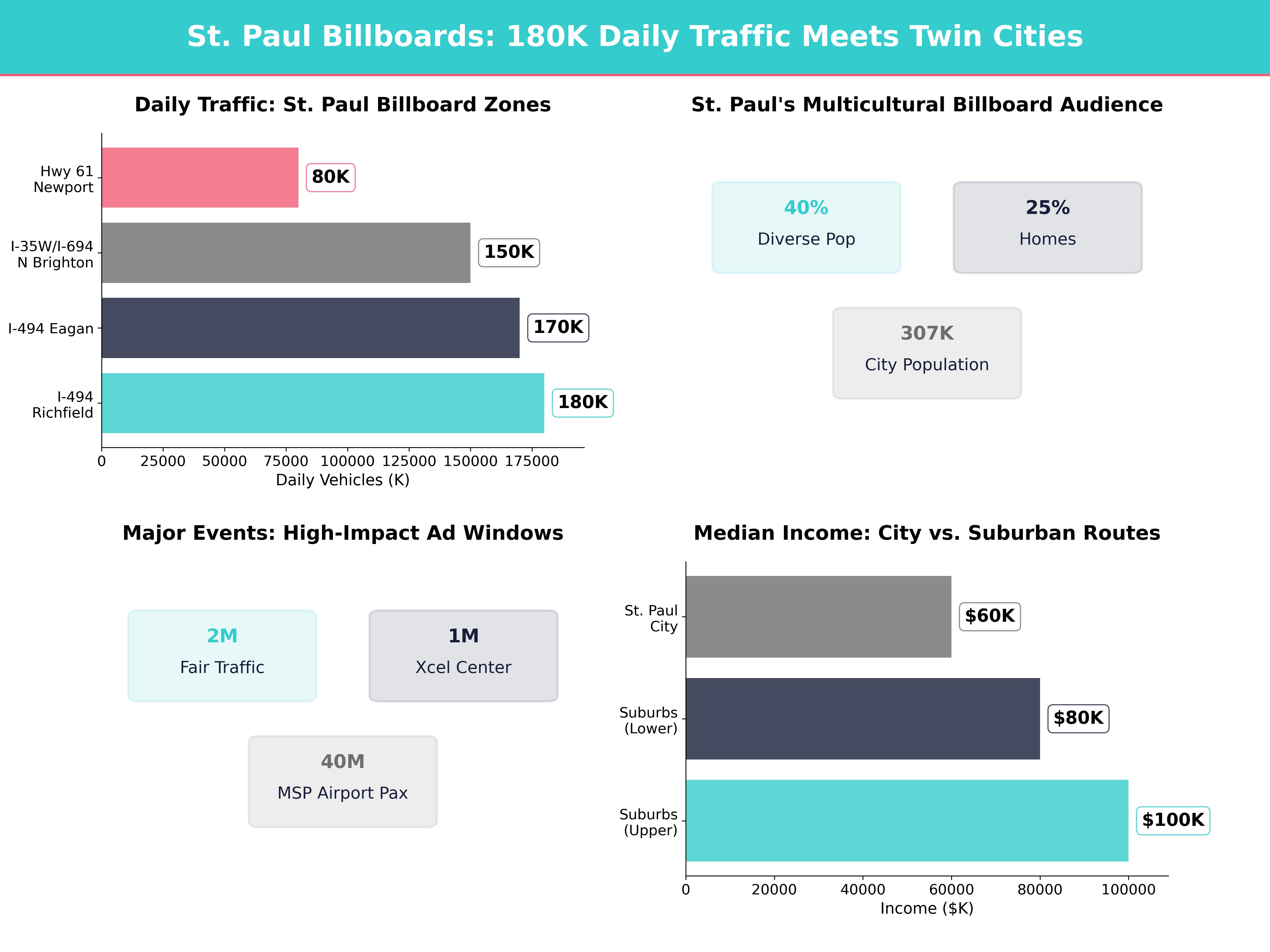
- The City of Saint Paul reports a population of just over 300,000 residents (about 307,000 in recent estimates), while the broader Twin Cities metro tops roughly 3.6–3.7 million people, according to regional planning data from the Metropolitan Council.
- About 1 in 4 St. Paul residents are under age 18, and the median age sits in the low 30s, producing a strong mix of young professionals, families with children, and college students from institutions like the University of St. Thomas Macalester College, and Hamline University.
- The city is one of Minnesota’s most diverse communities; more than 40% of residents identify as a race or ethnicity other than non-Hispanic white, and over 25% of residents speak a language other than English at home, with significant Hmong, Somali, and Spanish-speaking communities. This diversity should influence imagery, language choices, and cultural references in your creative.
- Median household income in St. Paul is in the mid–$60,000s, while some nearby suburbs—such as Eagan and Inver Grove Heights—regularly post median incomes in the $80,000–$100,000 range, creating a combined audience that spans budget-conscious households and higher-income shoppers.
Tourism and events also inflate daily audiences in the St. Paul area, increasing the value of strategically placed St. Paul billboards that can speak to both residents and visitors:
-
Visit Saint Paul notes that millions of visitors come each year for events at Xcel Energy Center, the Minnesota State Fairgrounds, CHS Field, and the downtown convention district.
- Xcel Energy Center alone can host more than 150 events per year, with a total annual attendance often exceeding 1 million people.
- CHS Field, home of the St. Paul Saints, draws several hundred thousand fans each baseball season.
- The Minnesota State Fair typically welcomes around 1.7–2.0 million visitors over its 12-day run, heavily impacting highways feeding the fairgrounds from the east and south.
-
Seasonal visitor surges are especially strong during:
- Winter events and hockey season at Xcel Energy Center (Minnesota Wild, college tournaments, concerts), where Wild home games bring 17,000+ attendees per game.
- Summer festivals and riverfront events along the Mississippi, with Saint Paul Parks and Recreation reporting millions of annual visits to parks, trails, and recreation facilities citywide.
- The Minnesota State Fair period in late August / early September, which heavily impacts traffic flows on key corridors serving the St. Paul area, including I‑35E, I‑94, and Highway 36.
For advertisers, this means:
- We can reach both highly local, neighborhood-oriented audiences and large numbers of out-of-town visitors with the same set of boards serving the St. Paul area.
- Campaigns benefit from local tone (references to neighborhoods, rivers, teams, seasons) while still appealing to a wide regional audience that includes millions of annual visitors, nearly 40 million annual passengers moving through Minneapolis–Saint Paul International Airport, and hundreds of thousands of event-goers.
- Well-planned billboard advertising near St. Paul can support both always-on brand awareness and short, event-driven pushes that ride these visitor waves.
Where Our Billboards Reach Around St. Paul
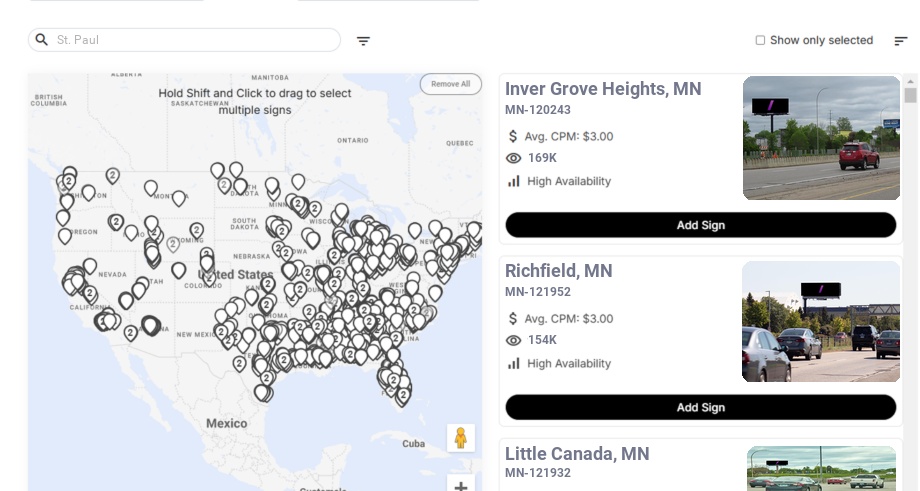
Our 14 digital billboards serving the St. Paul area sit on some of the busiest roadways in the southeast and north-metro corridors. While the displays themselves are in nearby cities, they are effectively St. Paul-area boards because of commuting and shopping patterns. For many advertisers, this makes them functionally equivalent to billboards near St. Paul downtown, but with added flexibility and reach.
Key locations and what they’re best for:
-
Newport (about 6.4 miles from St. Paul)
- Sits along major routes feeding into St. Paul from the southeast, including traffic from Cottage Grove, Hastings, and Wisconsin.
- Excellent for reaching daily commuters into downtown St. Paul, as well as weekend traffic heading to riverfront attractions and events.
- Minnesota Department of Transportation (MnDOT) traffic counts on corridors through Newport commonly exceed 50,000–70,000 vehicles per day on peak segments. On nearby stretches of I‑494 and Highway 61, select segments surpass 80,000 vehicles per day, creating millions of monthly impressions.
-
Eagan (about 6.5 miles from St. Paul)
- A major suburban employment and retail hub with big draws like Twin Cities Premium Outlets
- Located near I‑35E and I‑494, which together move well over 150,000 vehicles per day on key stretches south of St. Paul; some segments of I‑494 in this area approach or exceed 170,000 vehicles daily.
- Ideal for campaigns targeting shoppers, higher-income households, and airport-related traffic, as MSP Airport sits just west of Eagan and serves tens of millions of passengers annually.
-
New Brighton (about 7.9 miles from St. Paul)
- Captures north-metro traffic heading to and from both Minneapolis and the St. Paul area via I‑35W and I‑694.
- These corridors often see 120,000–150,000 vehicles per day on busy stretches, providing broad regional visibility.
- Strong choice for brands that want broad Twin Cities exposure while still having strong relevance for St. Paul residents who commute or shop across the north metro.
-
Inver Grove Heights (about 8.2 miles from St. Paul)
- Serves the south-side St. Paul area via Highway 52 and I‑494, key routes for industrial, logistics, and suburban commuter traffic.
- Highway 52 traffic volumes commonly reach 60,000–80,000 vehicles per day between St. Paul and Inver Grove Heights.
- Great for service businesses, home improvement, healthcare, and logistics/industrial advertising tied to the extensive industrial base along the Mississippi and nearby business parks promoted by the Saint Paul Port Authority.
-
Richfield (about 8.6 miles from St. Paul)
- Just west of the airport and south of Minneapolis, but heavily used by drivers traveling between the St. Paul area, MSP, and the wider metro via I‑494 and I‑35W.
- Daily traffic on I‑494 near Richfield is often above 150,000 vehicles, with some segments exceeding 180,000 vehicles per day, making these boards strong for regional campaigns and brand-building to both St. Paul and Minneapolis audiences.
- Proximity to major retail corridors like Southdale area shopping and airport hotel clusters further boosts consumer reach.
By mixing placements across these nearby cities, we can:
- Blanket key approach corridors into the St. Paul area (especially from the south and east).
- Reach both core St. Paul commuters and broader metro drivers who still shop, work, and play near the St. Paul area.
- Build frequency by showing messages repeatedly on the routes people travel every day—often 2–4 trips per weekday for core commuters—building the 7–10+ impressions per person that many advertisers target for brand recall.
- Treat this cluster as a flexible, digital alternative to traditional static billboard rental near St. Paul, with the advantage of quick creative swaps and fine-grained scheduling.
Traffic Patterns: When to Run Your Blips
Understanding how people move through the St. Paul area helps us schedule Blip campaigns at the highest-impact times. Good billboard advertising near St. Paul is not just about where your message appears, but also when it appears.
Daily rhythms
- According to commuting data compiled by regional planners and Ramsey County, roughly 70–75% of workers in the region drive alone to work, with another 7–10% carpooling. Transit, biking, and walking account for the remainder.
-
Typical rush hours:
- Morning: 6:30–9:00 a.m., peaking near 7:30–8:30 a.m., when thousands of vehicles per hour move toward downtown and key employment centers.
- Evening: 3:30–6:00 p.m., with Friday traffic often starting earlier and stretching longer as people leave town for weekend trips.
- Midday traffic remains strong along retail corridors near Eagan and Richfield thanks to shopping centers, medical campuses, and restaurants, where lunch-hour volumes can reach 60–80% of peak rush-hour levels.
For advertisers, this suggests:
- Commuter-focused campaigns (B2B services, financial services, higher education, subscription products) should prioritize morning and evening rush-hour blips on workdays to capture the 9-to-5 workforce that makes up the majority of vehicle trips.
- Retail and restaurant campaigns should layer in strong midday and early-evening schedules (11:00 a.m.–2:00 p.m., 4:00–7:00 p.m.), especially Thursday–Sunday when dining and shopping trips spike—local retail data often show weekend sales 20–40% higher than weekday averages.
- Event-driven campaigns (concerts, games, festivals) perform well in the afternoon and early evening on event days, catching people as they finalize plans and drive into downtown, the State Fairgrounds, or riverfront venues.
Weekly and seasonal variation
- Weekday commuting is strongest Tuesday–Thursday; traffic volumes on these days can be 5–10% higher than Mondays and Fridays.
- Weekend traffic becomes more leisure-focused—people heading to shopping, dining, parks, and the riverfront—supported by robust usage of the more than 100 parks and hundreds of miles of trails overseen by Saint Paul Parks and Recreation.
- Winters in the St. Paul area bring slower speeds and longer travel times due to snow and ice; MnDOT reports that average rush-hour speeds can drop 20–40% during winter storms. Drivers spend more time looking ahead and less time on their phones, which generally benefits billboard visibility.
- Summer construction season can shift volumes and routes, temporarily increasing impressions on detour corridors while reducing them on others.
We recommend:
- Scaling budgets and setting higher maximum bids during peak seasons that matter for your business (holiday shopping, tax time, back-to-school, summer tourism, State Fair window) when consumer spending can be 20–50% above off-peak months for many categories.
- Testing different dayparting patterns—such as limiting a brunch promotion to late-morning weekend hours, or running recruitment campaigns heavily on weekday commutes when job-search activity and HR response times are highest. This helps you treat your St. Paul billboards as a responsive digital channel rather than a static, fixed-timing placement.
Crafting Creative That Resonates in the St. Paul Area
The best-performing billboard creative near the St. Paul area tends to be:
-
Hyper-local in language and references
- Mention local landmarks or experiences: “5 minutes from the river,” “Just off I‑94 before downtown,” “Near the State Fairgrounds.”
- Use neighborhood names when relevant (Highland Park, Frogtown, East Side, West 7th, Lowertown) if your offer is location-specific.
- Localized references can significantly lift response; many advertisers see 10–30% higher engagement from creatives tailored to specific neighborhoods or corridors, especially when paired with billboards near St. Paul that locals drive past daily.
-
Seasonally relevant
- Winter: Highlight warmth, convenience, delivery, and indoor activities. For example, “Skip the snow—free delivery in the St. Paul area tonight.” Winter temperatures routinely dip below freezing for more than 100 days per year, boosting demand for delivery, auto care, and indoor entertainment.
- Summer: Focus on outdoor experiences, patios, trails, and riverfront fun, tapping into the high usage of regional trails and riverfront parks recorded by Saint Paul Parks and Recreation.
- Event tie-ins: Without using trademarked logos, you can reference “Tonight’s big game,” “After the show,” or “State Fair season” to connect with current events drawing people into the St. Paul area—especially useful on days when Xcel Energy Center or the State Fairgrounds are expecting tens of thousands of attendees.
-
Visually bold and easy to read
- Use large fonts and minimal words (7–10 words max); drivers typically have 6–8 seconds to absorb a message at highway speeds.
- High contrast colors: bright text on dark background or vice versa; this matters especially with snow glare in winter and dusk lighting in summer.
- Strong single image: a product shot, a local scene (skyline, Mississippi River, neighborhood gathering), or a clear human face expressing emotion. Campaigns that simplify to one key visual often see higher recall than cluttered designs.
-
Culturally inclusive
- Represent the region’s diversity in your imagery: multi-ethnic groups, varied ages, and family compositions that reflect a city where more than 40% of residents are people of color.
- If you’re targeting specific language communities (Hmong, Somali, Spanish), consider simple bilingual messages—but keep them concise to preserve readability. Even a short line like “Hmong & English spoken here” can make a campaign more relatable.
-
Action-oriented and directional
-
Call-to-action examples that work well near the St. Paul area:
- “Exit now for [Brand Name] – 2 miles ahead”
- “Order by 6 p.m. for same-day St. Paul area delivery”
- “Scan & save 20% near St. Paul today” (paired with a large, simple QR code)
- Many advertisers report that adding a clear call-to-action and distance marker (“2 miles ahead”) can improve response rates by 15–30% compared to brand-only messaging, helping billboard advertising near St. Paul feel immediately useful and actionable.
Using Blip’s Flexibility for St. Paul Area Targeting
Because our boards near the St. Paul area are digital, we can treat them more like a flexible media channel than a static sign. This makes them a powerful option for cost-conscious billboard rental near St. Paul, letting you adjust spend and timing without long-term commitments.
Here are ways to use that flexibility strategically:
-
Daypart targeting: Only run your ads during the hours that matter most.
- A coffee shop can concentrate between 6:00–10:30 a.m. on commuter corridors serving downtown St. Paul, aligning with the time window when more than half of daily commuters are on the road.
- A late-night restaurant or entertainment venue can focus on evenings and weekends near Eagan and Richfield, catching people heading out or back from MSP and suburban nightlife.
-
Weekpart targeting: Shift your budget toward high-intent days.
- Auto repair and home services: heavy Monday–Wednesday, when people react to weekend issues; many shops report Monday volumes 20–30% higher than midweek.
- Hospitality and events: Thursday–Sunday, when people are planning outings and staycations near the St. Paul area.
-
Location combinations:
- Use Newport + Inver Grove Heights boards to dominate the southeastern and southern corridors serving the St. Paul area—perfect for brands physically located on those sides of town or serving communities along Highway 52 and Highway 61.
- Combine Eagan + Richfield to reach airport travelers, hotel guests, and corporate commuters tied to the MSP corridor and I‑494 ring.
- Add New Brighton when your goal is broader metro awareness with continued relevance for St. Paul shoppers and workers who cross the river for employment or retail.
-
Budget control:
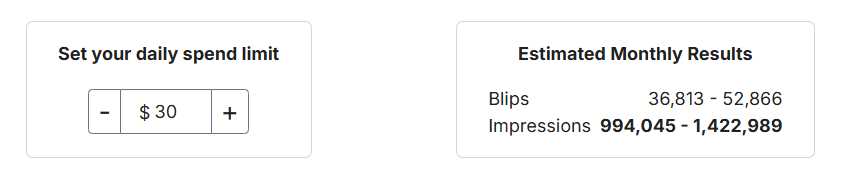
- Start small—set a modest daily budget and test two or three creative variations. For many local businesses, even $10–$20 per day can generate thousands of impressions on key corridors.
- Increase your maximum bid or daily budget during key periods like major concerts at Xcel Energy Center, the State Fair, or big retail weekends (Black Friday, back-to-school sales) when customer demand and traffic volumes both spike.
Aligning with St. Paul’s Economic Sectors
St. Paul’s economy is anchored by government, education, healthcare, manufacturing, and financial services, alongside a strong small-business and nonprofit sector. The City of Saint Paul and Minnesota Department of Employment and Economic Development highlight stable growth across these segments, with the broader Twin Cities region regularly posting low unemployment rates relative to national averages. Tailoring St. Paul billboards to these sectors can significantly improve relevance and return.
Some sector-specific ideas:
Healthcare & wellness
- Large hospital and clinic systems draw patients from across the metro into the St. Paul area. Multiple major hospitals, including Regions Hospital, United Hospital, and specialty centers, collectively treat hundreds of thousands of patients annually.
- Use boards in Eagan, Inver Grove Heights, and Newport to reach suburban patients heading into appointments—corridors where healthcare-related trips make up a significant share of non-commute travel.
-
Messaging ideas:
- “Same-day urgent care near the St. Paul area – Check in online now.”
- “Heart specialists minutes from downtown St. Paul. Book today.”
- Consider heavier rotation during flu season and winter months, when urgent care and clinic visits typically rise.
Education & training
- With multiple colleges and universities plus technical schools nearby, education advertisers can target both students and parents. Institutions like Saint Paul College, Metropolitan State University, and the private colleges mentioned earlier collectively serve tens of thousands of students each year.
- Run heavier schedules in August–September and December–January when enrollment decisions peak and campus visits spike.
- Focus on corridors via New Brighton and Eagan, where many prospective students and commuting families live, and where high-school and community-college catchment areas overlap.
- Highlight outcomes and convenience: graduation rates, job placement stats, flexible schedules, and proximity to transit or free parking.
Retail & dining
- Use high-traffic retail corridors near Eagan and Richfield for brand discovery, while Newport and Inver Grove Heights boards capture people heading toward the St. Paul area core and downtown entertainment districts like West 7th and Lowertown.
- Rotating creatives can highlight different offers by day or time: weekday lunch specials, weekend brunch, limited-time sales, or seasonal menus.
- Local spending data frequently show that restaurants and retail see 25–40% of weekly revenue from Friday–Sunday; matching heavier billboard presence to those days can maximize return.
Tourism, attractions, and events
- Coordinate with the visitor influx described by Visit Saint Paul and broader promotion from Explore Minnesota
-
Promote:
- Riverfront events, theater performances, local museums, and neighborhood festivals, including programming at venues like Ordway Center for the Performing Arts and attractions in Downtown Saint Paul.
- Packages for hotel + dining + attraction combos, especially around large regional events at the Capitol, Xcel Energy Center, CHS Field, and the State Fairgrounds.
- Emphasize proximity: “Just 10 minutes from downtown St. Paul,” “On your way to the show,” etc., which helps travelers unfamiliar with local geography feel confident about visiting and makes St. Paul billboards feel like trusted guides as well as advertisements.
Using Local News & Weather to Your Advantage
People in the St. Paul area are highly tuned in to regional news and weather, especially during winter storms, major sports runs, and political events.
- Local outlets like the St. Paul Pioneer Press (TwinCities.com) and the Star Tribune ( startribune.com KSTP 5 Eyewitness News and WCCO
-
Pair Blip campaigns with your PR, social, or sponsorship efforts surrounding:
- Legislative sessions or civic events at the Capitol, tracked by the Minnesota Legislature.
- Playoff runs or rivalry games for teams like the Minnesota Wild at Xcel Energy Center or local college tournaments.
- Big concerts and touring shows at regional venues that regularly sell 10,000–18,000 tickets per night.
Creative ideas:
- Contextual lines like “Heading to the game? Grab dinner on West 7th first.”
- Weather-reactive concepts you update manually: “Snow day special – 20% off delivery in the St. Paul area tonight.” During major snow events, vehicle speeds slow and commute times may lengthen by 20–60%, extending the window for your message to be seen and increasing the value of billboard advertising near St. Paul’s busiest approaches.
Measuring Impact and Optimizing Over Time
To get the most out of digital billboards near the St. Paul area, we should plan from the start to measure and refine. This is especially important when you’re comparing options for billboard rental near St. Paul and want to justify ongoing investment.
1. Define success metrics
- For local businesses: in-store visits, phone calls, coupon redemptions, or website traffic from the St. Paul area. For example, track changes in foot traffic with simple before-and-after comparisons during a four-week flight.
- For regional brands: branded search volume, website sessions from Twin Cities IP addresses, and lift in conversions during campaign periods. Aim to correlate these with known impression counts from your Blip placements.
2. Create trackable offers
- Include short URLs or QR codes leading to a St. Paul–specific landing page; QR usage has grown significantly in retail and dining, making it a familiar interaction for many customers.
- Use offer codes like “STP10” so you can directly attribute responses.
- Time-bound messages (“This weekend only”) make it easier to correlate spikes in activity with specific flight dates and times.
3. A/B test creative
-
Run two designs at once across the same set of boards:
- Version A: product-focused
- Version B: testimonial or benefit-focused
-
Compare:
- Website traffic or conversions during each creative’s run.
- Any changes in store traffic or call volume aligned with the flights. Even a 5–10% performance difference can be meaningful at scale.
- Rotate in a new “winner” every few weeks to keep creative fresh while continuing to improve results.
4. Adjust placements and timing
- If you notice stronger results in the south metro, shift more budget to Eagan, Inver Grove Heights, and Newport, matching where your highest-value customers live or commute.
- If your audience appears more north-metro or Minneapolis-based but still uses St. Paul services, keep New Brighton and Richfield in the mix.
- Review performance after at least 2–4 weeks of data; shorter windows can be skewed by one-off events like major storms or unusually large concerts.
Putting It All Together
Reaching audiences in the St. Paul area with digital billboards is about combining four elements:
- Strategic placement across Newport, Eagan, New Brighton, Inver Grove Heights, and Richfield to control key approach routes into and around the St. Paul area, where individual corridors often see 50,000–180,000 vehicles per day.
- Smart timing that follows commuter flows, shopping behavior, and the region’s strong event and seasonal patterns, aligning your heaviest presence with days and hours when your audience is most active.
- Locally resonant creative that reflects St. Paul’s culture, diversity, and weather while staying bold and simple, with 7–10 word messages and high-contrast visuals.
- Ongoing optimization using Blip’s flexibility, small test budgets, and clear tracking to double down on what works, steadily improving results over successive flights.
By approaching the St. Paul area as both a strong local hub and a gateway for statewide and regional visitors, we can use our 14 digital billboards to build awareness, drive immediate response, and keep your brand top-of-mind across the east side of the Twin Cities. For organizations comparing different billboards near St. Paul, this integrated, data-informed approach helps ensure every impression works harder and every campaign is easier to refine over time.