Understanding the St. Louis Park Area Market
St. Louis Park is a dense, well-educated, and relatively high-income inner-ring suburb that punches above its weight as an advertising market, making St. Louis Park billboards particularly valuable for regional and local brands.
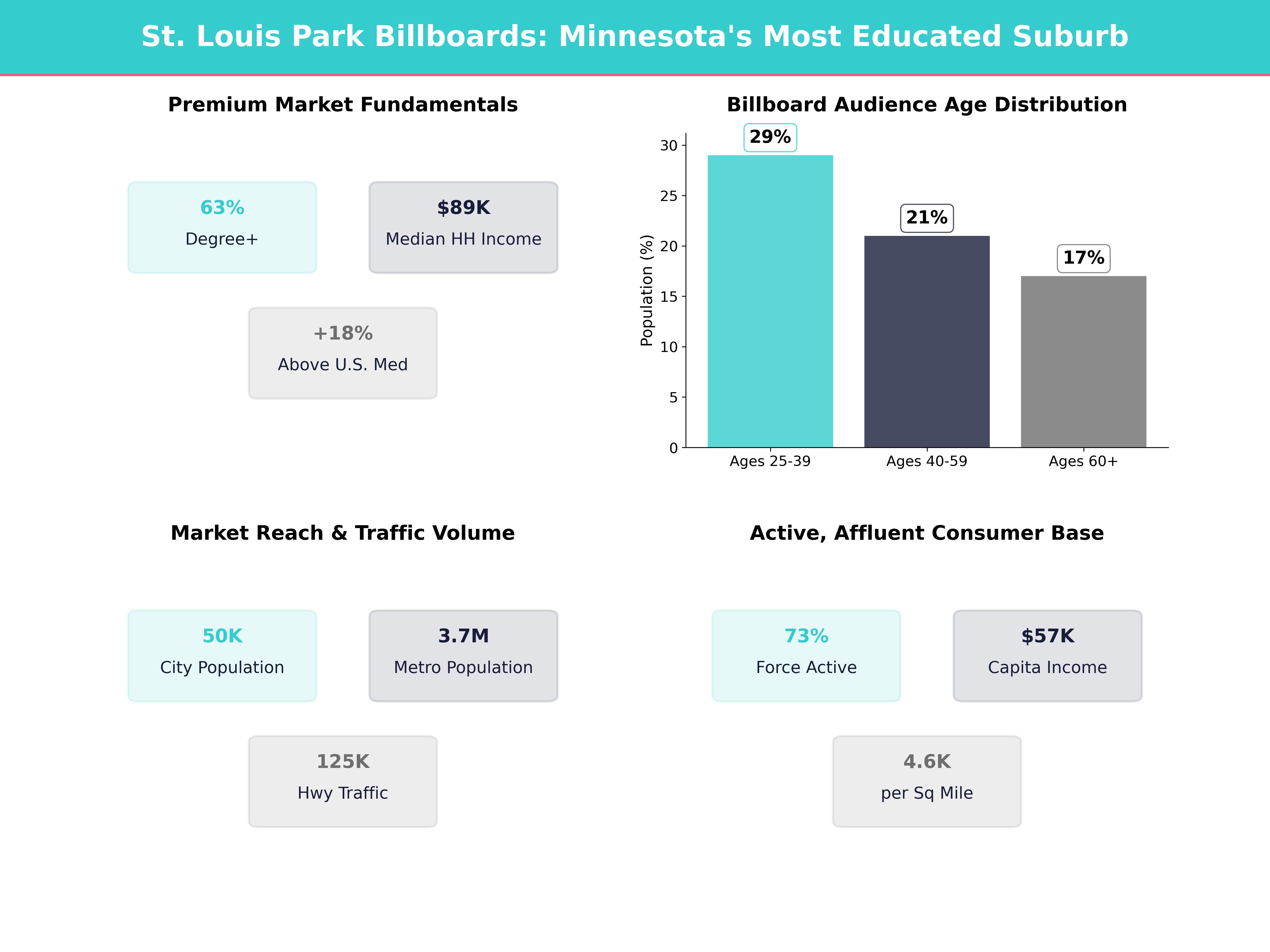
Key demographics ( City of St. Louis Park
- Population: 50,010 residents
- Land area: about 10.8 square miles (≈4,630 residents per square mile), meaning messages reach a concentrated audience
- Housing: roughly 24,000+ housing units, with a significant share in multifamily buildings—ideal for renter- and young-professional-focused campaigns
- Median household income: approximately $88,000–$90,000 (2018–2022 ACS), about 15–20% higher than the U.S. median and several thousand dollars above the Minnesota median
- Per capita income: roughly $57,000+, supporting discretionary spending on dining, travel, and premium services
- Education: about 60–65% of adults hold a bachelor’s degree or higher, creating a strong market for professional services, healthcare, tech, and specialty retail that benefit from high-visibility St. Louis Park billboards
- Labor force participation: typically in the 70–75% range for adults 16+, reflecting a highly engaged working population
-
Age mix:
- Roughly 28–30% ages 25–39 (prime renters, young families, and professionals)
- Around 20–22% ages 40–59
- About 16–18% ages 60+ with strong buying power in home improvement, financial services, and healthcare
- Commuting: a large majority of workers commute out of the city daily, many to nearby Minneapolis, Edina, and other west-metro job centers, creating steady exposure opportunities for billboard advertising near St. Louis Park along their travel paths
In the broader Minneapolis–St. Paul metro:
- Population: roughly 3.7 million people (2023 estimates)
- Regional GDP: more than $280 billion, placing the metro among the top 20 U.S. regional economies
- The Twin Cities metro unemployment rate has recently trended around 2.5–3.5%, typically 1–1.5 percentage points lower than the U.S. average
- Minnesota’s labor force participation rate has consistently been among the top in the U.S., often 5+ percentage points above the national rate, indicating strong economic engagement and commuting volumes
These factors make billboard advertising near the St. Louis Park area ideal for:
- Local service businesses (healthcare, fitness, auto, home services)
- Regional brands looking to reach high-intent, high-income consumers
- B2B advertisers targeting professionals who live in St. Louis Park but work across the metro
- Multi-location retailers and restaurants anchoring in nearby commercial districts
For more context on the community, business climate, and development trends, the City of St. Louis Park Discover St. Louis Park St. Louis Park & Golden Valley Tourism
Where Our Boards Are and How They Serve St. Louis Park
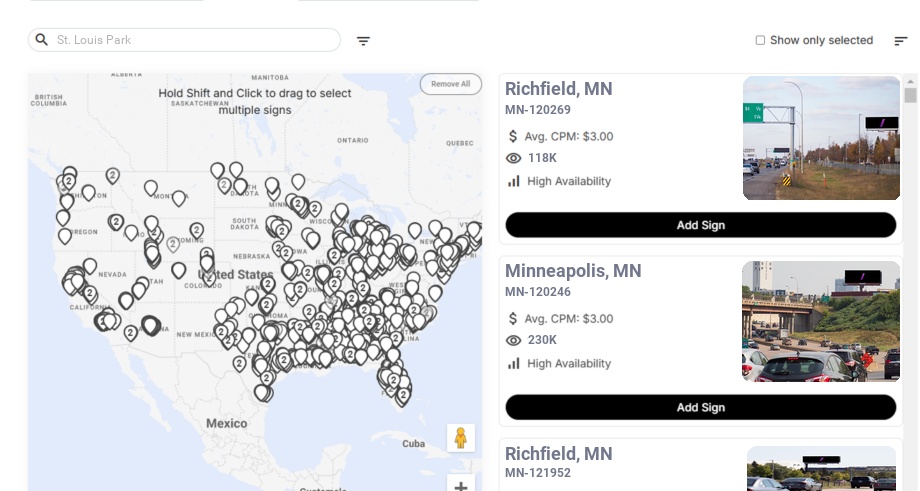
Our three digital billboards serving the St. Louis Park area are located in Richfield, approximately 7.7 miles away. That positioning is strategic for anyone looking for billboard rental near St. Louis Park:
- Richfield borders key regional destinations like Minneapolis–St. Paul International Airport (MSP), the Mall of America, and the Southdale / Edina retail corridor.
- MSP is one of the nation’s busiest airports, supporting more than 400 daily departures and connecting to 160+ nonstop destinations (see the Minneapolis–St. Paul International Airport site).
- The Mall of America draws 40+ million visitors per year, more than most major U.S. attractions, making corridors around it some of the most trafficked in Minnesota.
- Major highways such as I-494 and I-35W channel 100,000–150,000+ vehicles per day on key segments between the south metro, Minneapolis, and inner-ring suburbs like St. Louis Park (see the Minnesota Department of Transportation traffic volume maps).
While the boards sit in Richfield, they capture:
- St. Louis Park residents heading to the airport, south metro shopping, or employment centers who naturally pass billboards near St. Louis Park and Richfield
- Commuters and shoppers from Bloomington, Edina, Minneapolis, and Richfield who also regularly visit the St. Louis Park area for retail, restaurants, medical care, and recreation
- Cross-metro drivers using beltway routes instead of driving straight through downtown
Nearby Richfield itself has about 36,000 residents in just 7 square miles, with more than 5,000 residents per square mile, so creative on these boards also taps a dense local customer base (see the City of Richfield for community and economic data). This combination of dense local audiences and regular cross-traffic makes St. Louis Park billboards in nearby Richfield a cost-effective option.
By using Blip’s campaign tools, we can:
- Concentrate impressions on commuter-heavy dayparts that align with St. Louis Park residents’ travel patterns
- Emphasize creatives and calls-to-action that reference recognizable St. Louis Park area destinations (e.g., The Shops at West End, Excelsior Boulevard, local parks and schools)
- Use proximity messaging (“Minutes from this exit in the St. Louis Park area”) to drive traffic to your location and make your billboard advertising near St. Louis Park feel immediately relevant
To better understand transportation patterns that feed this audience, check regional information from Hennepin County, MnDOT, and the Metropolitan Council, which publishes regional traffic, transit, and development reports.
Local Mobility & Traffic Patterns to Target
While specific traffic counts vary by roadway and year, the Minneapolis–St. Paul region is highly car-dependent:
- In many inner-ring suburbs like St. Louis Park, 70–75% of workers drive alone to work, with another 7–10% carpooling.
- Transit, biking, and walking together often account for 10–15% of commutes—still meaningful audiences that often travel along the same major corridors.
- Average commute times in the metro hover around 23–25 minutes, slightly below the national average but long enough for drivers to regularly encounter roadside media.
- The Twin Cities freeway system handles several million vehicle miles traveled (VMT) daily, with I-494, I-35W, and Highway 62 among the heaviest-used corridors in the south and west metro.
Key mobility patterns relevant to St. Louis Park:
- East–West Workflows: Many St. Louis Park residents work in downtown Minneapolis, the I-394 corridor, or medical and corporate campuses in the west metro. I-394 alone carries 100,000+ vehicles per day in some segments, and many of these drivers connect to south metro or airport-bound routes via I-35W and I-494, moving through Richfield and encountering billboards near St. Louis Park along the way.
- Airport & Travel: MSP International Airport handled approximately 34–35 million passengers in 2023 (see Metropolitan Airports Commission), with tens of thousands of passengers and greeters moving through each day. A large share are local residents traveling or picking up friends and family. This makes south-metro corridors particularly valuable for travel, luggage, parking, and hospitality campaigns that want to reach St. Louis Park residents before or after trips.
- Retail & Dining Trips: Edina’s Southdale Center Mall of America, and big-box clusters in Bloomington and Richfield attract millions of visits annually. St. Louis Park’s own West End and Excelsior Boulevard retail corridors also draw heavy daily traffic, especially evenings and weekends. Placing messages on boards near the route to these destinations creates high purchase intent and justifies strategic billboard rental near St. Louis Park.
- Transit Corridors: While this guide focuses on drivers, Metro Transit’s bus and light rail network moves more than 30 million riders per year across the region, many along the same major roadways where billboards are located—supporting brand frequency among multimodal travelers.
How to use this with Blip:
-
Weekday AM drive (6–9 a.m.)
Reach St. Louis Park residents heading to work, school, or the airport. Great for:
- B2B services, financial institutions, healthcare, and education
- Breakfast, coffee, and quick-service restaurant ads timed to commuter hunger
-
Weekday PM drive (3–7 p.m.)
Capture residents returning home or heading to errands and evening activities:
- Grocers, fitness centers, after-school programs
- Home services (HVAC, plumbing, landscaping) and home improvement retailers
-
Weekends (late morning through evening)
Target shoppers, families, and entertainment-seekers:
- Restaurants, breweries, arts and culture, sports bars, attractions
- Local events and festivals in the St. Louis Park area and nearby Minneapolis/Edina
Using Blip, we can selectively bid for these dayparts instead of paying for every hour of the day, making billboard advertising near St. Louis Park more efficient for both small and large advertisers.
Seasonal Opportunities in the St. Louis Park Area
Minnesota’s seasonality is a major asset for dynamic digital creatives. St. Louis Park residents experience distinct behaviors by season, so planning billboard rental near St. Louis Park around the calendar can significantly improve relevance.
Winter (December–February)
- The Twin Cities average roughly 50–55 inches of snow per year, and winter temperatures frequently drop below 0°F, with wind chills much colder.
- Energy use and home-heating concerns spike, with utilities reporting some of their highest demand days in January and February.
- Residents focus on home comfort, vehicle reliability, indoor recreation, and travel escapes; winter-related auto incidents and roadside assistance calls typically rise by 20–30% on severe weather days.
Campaign ideas:
- “Furnace tune-up” or “Driveway plowing” creatives for home and auto services
- Ski and snowboard shops, indoor sports facilities, kids’ activity centers
- Warm-weather vacation offers timed around popular break periods (e.g., winter holidays and school breaks in late December, February, and March)
Use Blip to swap winter-specific creatives once temperatures drop and incorporate real-time language (“Stay warm in the St. Louis Park area tonight”). Weather-responsive creative is especially powerful in a market where more than 100 days per year can feature measurable snow or freezing temperatures.
Spring (March–May)
- Home improvement season ramps up as snow melts; local contractors often report inquiry spikes of 20–40% between March and May versus winter months.
- Gardening, landscaping, roofing, and remodeling searches and store visits climb rapidly as average highs rise from the 40s into the 60s.
- Tax refunds often arrive in April, giving households extra disposable income for big-ticket projects and purchases.
Campaign ideas:
- Before/after creatives for roofing, siding, and landscaping with offers like “Book by May 15”
- Car dealers and auto repair shops promoting spring inspections and tire changes as drivers remove snow tires
- Local colleges, training programs, and camps advertising enrollment deadlines, especially as families plan for summer activities
We can gradually adjust creatives as early spring slush gives way to full greenery, targeting homeowners, DIY enthusiasts, and families, and ensuring St. Louis Park billboards stay seasonally relevant.
Summer (June–August)
- The region enjoys long daylight, with up to 15–15.5 hours of light around the June solstice—extending billboard visibility well into evening.
- Outdoor recreation surges: Minnesota has more than 11,000 lakes, and the Minneapolis–St. Paul area ranks among the top U.S. metros for parks access and bike trails.
- Local events and festivals, from neighborhood celebrations to large concerts and sports, pack the calendar; tourism agencies note that a substantial portion of annual visitor spending occurs in summer.
Campaign ideas:
- Restaurants, patios, breweries, and ice cream shops touting specials or live music
- Youth camps, sports leagues, and summer classes using strong imagery and short deadlines
- Real estate and apartment communities targeting movers with “Now leasing near the St. Louis Park area,” especially as many leases turn over between May and August
Check local event calendars at Discover St. Louis Park Meet Minneapolis, and Explore Minnesota
Fall (September–November)
- Back-to-school season brings routine back for the roughly 15–20% of households with children, along with spending on supplies, clothing, and activities.
- Football—Minnesota Vikings (NFL) and Gophers (college)—and high school sports drive regular viewing and gathering habits from September through November.
- Early holiday shopping continues to grow; surveys show 40–50% of shoppers start at least some holiday purchasing by early November.
Campaign ideas:
- After-school programs, tutoring centers, and youth sports tied to the school-year schedule
- Healthcare appointments (physical exams, dental, eye care) before year-end benefits expire—especially effective in October–December
- Retailers promoting early holiday sales and “shop local” messaging, potentially referencing small business events in downtown St. Louis Park, Minneapolis, or nearby commercial nodes
Blip’s scheduling lets us pre-plan a sequence of fall creatives: back-to-school in August, football tie-ins in September, and benefits/holiday-focused messaging in November, all supported by billboards near St. Louis Park that stay top of mind through the season.
Crafting Creative That Resonates in the St. Louis Park Area
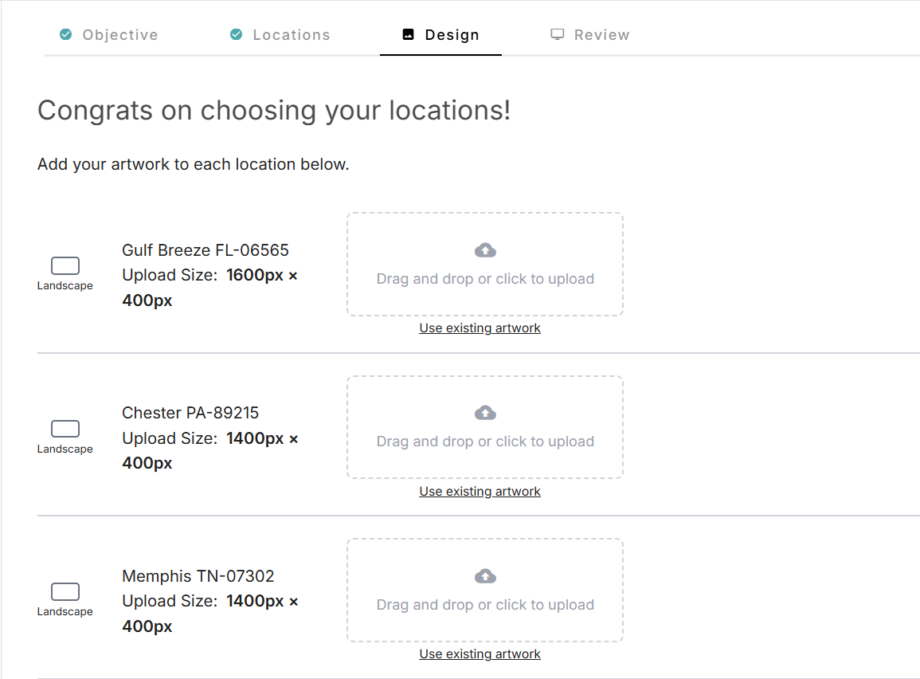
To connect with St. Louis Park area audiences, creatives should reflect local context: educated, media-savvy, and time-constrained. Well-crafted billboard advertising near St. Louis Park should be simple, bold, and locally grounded.
Best practices for artwork:
-
Lead with one bold message
-
Use 7 words or fewer for your main line:
- “Urgent care minutes from the St. Louis Park area”
- “New luxury apartments near West End”
- Pair with a large logo and clear call-to-action (“Exit now,” “Book today,” “Scan to save”). Studies of outdoor effectiveness show that recall drops sharply once headline length exceeds roughly 8–10 words.
-
Reference recognizable locations
- Use names like “West End,” “Excelsior Blvd,” “Highway 100,” or “Cedar Lake” when appropriate.
-
For Richfield-located boards, emphasize quick travel from the St. Louis Park area:
- “Just 10 minutes from the St. Louis Park area via Highway 62.”
-
Leverage high incomes and education
-
Highlight quality and expertise more than just price:
- “Board-certified specialists serving the St. Louis Park area”
- “Fee-only fiduciary advice for west metro families.”
- This aligns with a market where more than 60% of adults have a bachelor’s degree and household incomes commonly exceed $90,000.
-
Use dynamic, time-sensitive offers
-
Because digital boards can rotate creatives, we can:
- Run weekday vs. weekend offers
- Test different price points or packages
- Promote limited windows (“This week only,” “Enroll by Friday”)
- Advertisers commonly see higher response rates—often 10–30% better—when limited-time urgency is clear in the message.
-
Design for weather and light
- High-contrast designs (light on dark or dark on light) read well during both bright summer days and long winter nights.
- Avoid overly detailed photos; one strong visual subject works best. Outdoor industry tests show that audiences often have 3–5 seconds to process a billboard, so minimal text and bold visuals are crucial.
For design inspiration and specs, we can align with general outdoor guidelines and then tailor to specific board sizes used by our Richfield locations. For additional local branding cues, browse imagery and style from Discover St. Louis Park Meet Minneapolis. These can help ensure your St. Louis Park billboards feel authentic and locally grounded.
Using Blip’s Tools: Budgeting, Bidding, and Dayparting
Because Blip sells digital billboard inventory by the “blip” (a single 8–10 second ad play), we can customize campaigns for advertisers of nearly any budget in the St. Louis Park area and scale billboard rental near St. Louis Park up or down as needed.
How to structure campaigns:
-
Start with a clear geography concept
- Focus messaging around the St. Louis Park area, even when boards are in Richfield.
- Consider radius-based CTAs: “Within 15 minutes of the St. Louis Park area,” which corresponds to much of southwest Minneapolis, Edina, Hopkins, and parts of Bloomington.
-
Choose dayparts strategically
- For professional services: weekday mornings and evenings when commute volumes peak (AM and PM rush hours often account for 30–40% of daily traffic on busy corridors).
- For restaurants and entertainment: evenings and weekends, when discretionary trips increase.
- For retail promotions: lunch hours, PM commute, and Saturdays, which many retailers cite as their single busiest in-store day.
-
Set a test budget
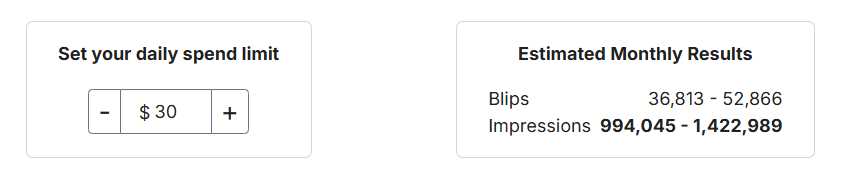
- Even modest daily spends (e.g., $10–$30/day) can generate hundreds to low thousands of plays per week across boards, depending on competition and time of day.
- Run for at least 2–4 weeks to capture typical weekly patterns and adjust based on response.
-
Bid intelligently
- Bids can be raised during premium times (weekday rush hours) or decreased during off-peak hours like late evenings or mid-days.
- We can prioritize frequency around specific events—such as a local open house, grand opening, or sale—by temporarily raising bids for those days and times.
-
Rotate multiple creatives
- Use 2–5 versions to test different headlines, offers, or images.
- After a couple of weeks, we can check which creatives correlate with higher web traffic, calls, or store visits.
- Advertisers that regularly A/B test creative often see incremental lifts of 10–20% in response after optimizing against early performance data.
This flexible structure makes digital billboard advertising near St. Louis Park accessible to businesses that previously assumed out-of-home was out of reach.
Local Business Use Cases in the St. Louis Park Area
Digital billboards serving the St. Louis Park area are especially powerful for these categories and provide a strong foundation for billboard rental near St. Louis Park that drives measurable results:
Healthcare & Wellness
St. Louis Park and the west metro are home to numerous clinics, specialists, and fitness centers, including facilities tied into major systems like Park Nicollet Methodist Hospital. Educated, higher-income residents are proactive about healthcare:
- Preventive care usage and insurance coverage rates are relatively high compared to national averages.
- Households with incomes above $75,000 tend to spend significantly more on wellness, fitness, and elective healthcare services.
Ideas:
- Primary care and urgent care: “Same-day appointments near the St. Louis Park area—Walk in or check in online.”
- Dental and orthodontics: highlight insurance open enrollment or back-to-school checkups.
- Gyms, yoga studios, and personal training: “First month $1 for St. Louis Park area residents.”
For broader healthcare context, you can review community health data and services via Hennepin County Public Health
Auto Dealers & Services
Suburban households often have multiple vehicles and commute frequently:
- In many west-metro suburbs, vehicle ownership rates exceed 1.7–2.0 vehicles per household.
- Cold winters and hot summers drive seasonal demand for maintenance (tires, batteries, HVAC systems).
Ideas:
- Promote seasonal tire changes, oil changes, and winter prep: “Ready for winter roads near the St. Louis Park area?”
- Feature 1–2 vehicles at a time instead of your whole inventory for visual clarity.
- Rotate lease specials by payment amount and model to A/B test which offers drive the most leads.
Nearby auto corridors in Bloomington, Richfield, and the West End also support cross-shopping; consider creative that mentions proximity to these known auto clusters and highlights easy access from billboards near St. Louis Park.
Restaurants, Breweries, and Entertainment
The St. Louis Park area has a strong dining and nightlife scene, plus easy access to Minneapolis and Edina:
- Twin Cities households spend a substantial share of their food budget on dining out, and higher-income households are even more likely to visit restaurants multiple times per week.
- Sports and entertainment traffic—Vikings, Twins, Timberwolves, Gophers, concerts—draws tens of thousands downtown on game or show days.
Ideas:
- Happy hour and game-day specials during evening rush and weekends.
- Family dining promotions near school start/end times.
- Event-based creatives tied to major sports or concerts in Minneapolis (check Star Tribune KARE 11 for schedules and coverage).
- Promotions aligned with local arts and community events listed on Discover St. Louis Park Meet Minneapolis.
These formats work especially well on St. Louis Park billboards that drivers see repeatedly on their way to and from events.
Real Estate & Housing
St. Louis Park’s proximity to downtown and suburban job centers makes it popular with renters and homebuyers:
- Median home values in the area are often in the $350,000–$400,000+ range, with many properties selling quickly in competitive conditions.
- A significant share of housing units are renter-occupied, supporting ongoing demand for apartments and townhomes.
- Regional apartment occupancy often runs in the 94–97% range, with regular lease-up activity for new projects.
Ideas:
- New developments: “Now leasing 1–2 BR near West End—Tour today.”
- Real estate agents: “Thinking of selling in the St. Louis Park area? Free home valuation.”
- Senior living communities: emphasize safety, amenities, and proximity to family in the west metro.
- Mortgage and refinance offers timed to interest-rate movements and spring/summer homebuying seasons.
Consistent billboard advertising near St. Louis Park helps keep your listings, communities, or brokerage top of mind among this highly mobile audience.
Measuring and Optimizing Campaign Performance
Digital billboard advertising near the St. Louis Park area works best when we tie it to measurable outcomes and use performance data to refine how we approach billboard rental near St. Louis Park over time.
Ways to track:
-
Unique URLs and QR codes
- Use a short, memorable URL or a QR code with UTM parameters to track visits.
- Compare website traffic patterns from the St. Louis Park, Richfield, Edina, and Bloomington ZIP codes during times your ads run.
- Many advertisers see 5–15% of total website sessions coming from direct and QR-linked traffic during strong out-of-home campaigns.
-
Offer codes and phrases
- Include a code like “Mention PARK10 for 10% off” to trace redemptions.
- Track inbound calls and form submissions mentioning the billboard. Even a handful of high-value conversions (e.g., real estate, medical procedures, B2B contracts) can easily cover several weeks of Blip spend.
-
Time-based correlations
- If you schedule heavier display during morning commutes, watch for spikes in calls or web visits between 7–10 a.m.
- Compare performance between time blocks (AM vs. PM vs. weekend) to see where your best cost-per-response emerges.
- Adjust bids and creatives based on when responses are strongest, potentially shifting 20–40% of your budget toward the highest-performing windows over time.
-
Local news and events alignment
- Tie creatives to major local happenings—such as weather events, sports playoffs, or big concerts—and monitor short-term lifts in website visits or store traffic.
- Stay informed via outlets like the Sun Sailor – St. Louis Park, Minnesota Public Radio News, and KSTP 5 Eyewitness News.
- When possible, align your message with community priorities (e.g., back-to-school drives, local festivals, or charity runs) to increase relevance and brand goodwill.
By combining local data, thoughtful creative, and Blip’s flexible scheduling and budgeting tools, we can build billboard campaigns that efficiently reach and influence audiences in the St. Louis Park area—whether they’re commuting through Richfield, heading to the airport, or traveling between work, home, and the many destinations that make this inner-ring suburb such a valuable advertising market for billboards near St. Louis Park.