Understanding the Red Hill Area Audience
Red Hill is an unincorporated, rapidly growing community on the west side of the Waccamaw River, just outside Conway. It functions as a bedroom community for both Conway and Myrtle Beach, which makes Red Hill billboards especially useful for reaching people in both their home and work routines.
-
Population & growth
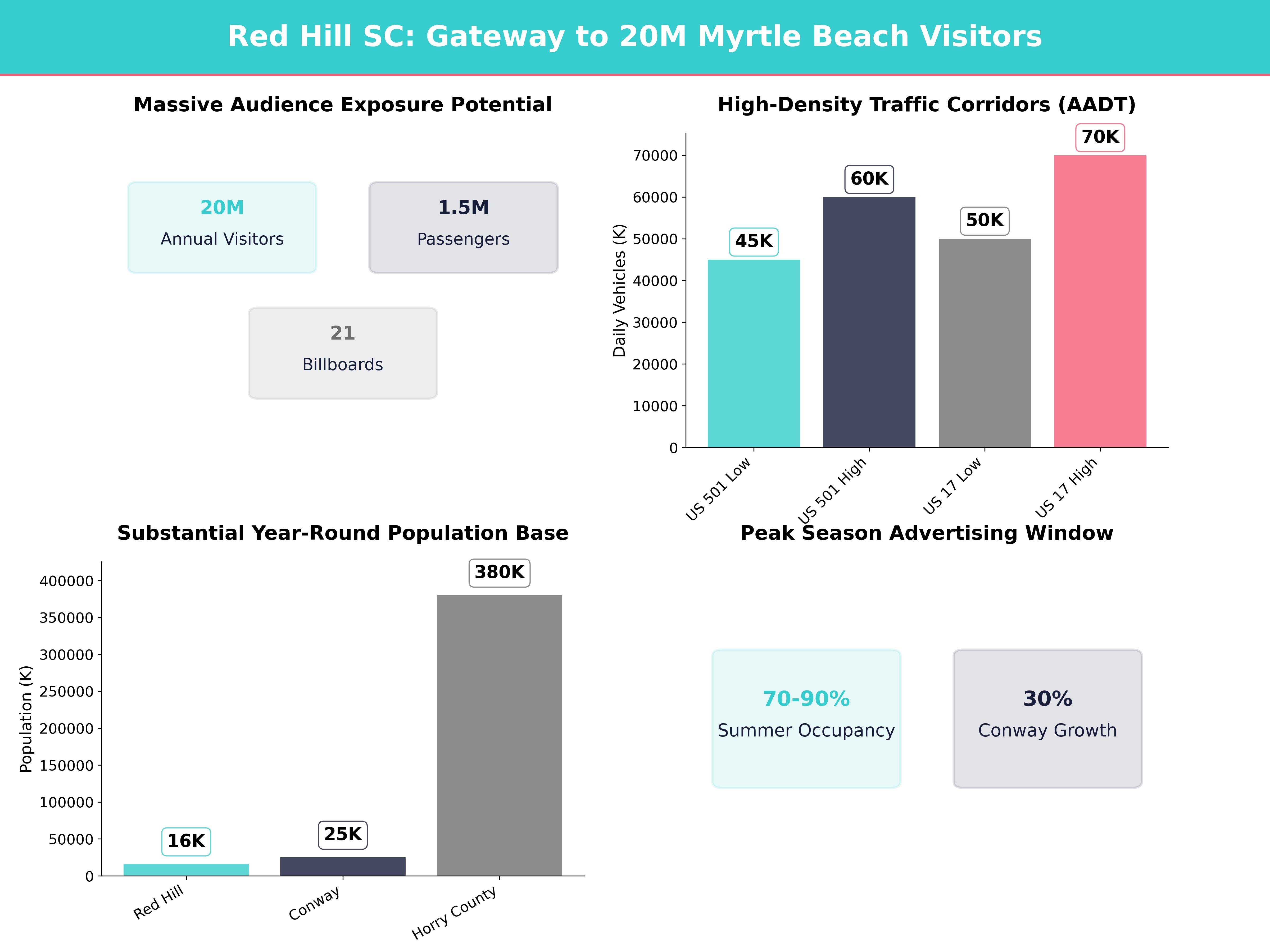
- The Red Hill census-designated area is home to roughly 16,000 residents as of 2020, up sharply from the early 2010s, reflecting strong suburban growth in western Horry County.
- Nearby Conway's population is about 25,000 and has grown more than 30% since 2010, according to summaries provided by the City of Conway.
- Horry County overall has surpassed 380,000 residents, with county planning materials noting that the population has roughly doubled since the mid‑1990s, making it one of South Carolina’s fastest‑growing counties. Long‑range plans on the Horry County Government site anticipate continued strong in‑migration tied to tourism and retirement.
- Median household income in the Conway–Red Hill area generally falls in the $45,000–$55,000 range, compared with South Carolina’s statewide median in the low‑$60,000s, which reinforces the importance of clear value propositions in local advertising.
- Horry County’s median age is in the low 40s, reflecting a mix of young families, college students, service workers, and retirees relocating to the coast.
-
Visitor impact
- The Myrtle Beach area attracts around 20 million visitors annually, according to the Myrtle Beach Area Chamber of Commerce
- Tourism is the dominant economic driver: local tourism organizations estimate that visitors support tens of thousands of jobs in Horry County and generate billions of dollars in direct and indirect spending each year.
- Many of these visitors arrive via inland routes such as US 501, which runs directly through Conway just a couple of miles from the Red Hill area. During peak summer weekends, daily traffic volumes on US 501 can climb well above average counts as vacationers arrive and depart.
- Myrtle Beach International Airport (MYR) 1.5 million passengers per year, feeding additional visitor traffic into the Grand Strand
-
Local economy
- Key sectors include tourism, hospitality, retail, healthcare, education (anchored by Coastal Carolina University in nearby Conway and Horry‑Georgetown Technical College), construction, and services that support both residents and tourists.
- Horry County routinely reports unemployment rates that track close to or slightly below the South Carolina average, but those rates swing seasonally as tourism hiring accelerates in spring and tapers in late fall.
- Healthcare is a major local employer, with systems such as Conway Medical Center and Grand Strand Medical Center supporting a growing year‑round population.
- Median household incomes in the Conway–Red Hill corridor tend to be modest compared to national averages, but consumer spending is boosted seasonally by visitor dollars and by retirees with steady out‑of‑area income streams.
Implication for advertisers: we’re not just speaking to “beach tourists” or just to “local families.” The Red Hill area is a hybrid market: year‑round residents commuting for work and school, plus large surges of beach-bound visitors flowing nearby. Campaigns work best when we decide which of those audiences we want to dominate, then schedule and design creative accordingly so billboard advertising near Red Hill speaks directly to the right people at the right times.
Where the Traffic Flows: Key Corridors Serving the Red Hill Area
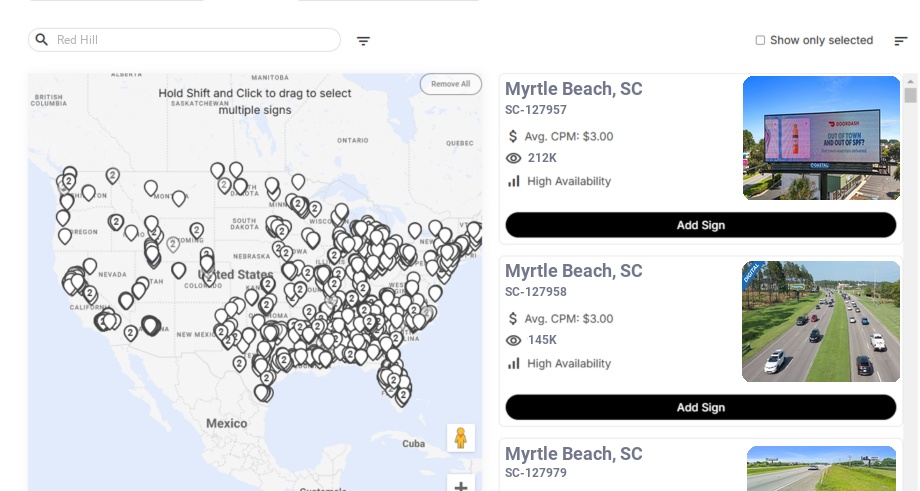
Our 21 digital billboards serving the Red Hill area are positioned in nearby Conway (about 2.3 miles away) and Myrtle Beach (about 8 miles away), along the pathways residents and visitors actually drive. When you’re considering billboard rental near Red Hill, these are the primary corridors your messages will appear on.
Key roads and patterns to consider:
-
US Highway 501 (Conway–Myrtle Beach corridor)
- US 501 is the primary inland route from I‑95 and the rest of South Carolina into the Myrtle Beach area.
- South Carolina Department of Transportation (SCDOT) traffic counts show annual average daily traffic (AADT) on certain US 501 segments near Conway exceeding 45,000–60,000 vehicles per day. You can browse interactive counts on the SCDOT traffic count portal
- During peak check‑in and check‑out weekends in summer, local agencies have documented holiday‑weekend volumes that can surge well beyond normal AADT levels, leading to extended backups in and around Conway and Red Hill.
-
This corridor captures:
- Red Hill and Conway residents commuting to Myrtle Beach and Carolina Forest.
- Seasonal tourists heading into and out of the Grand Strand.
- Students and staff traveling to Coastal Carolina University and Horry‑Georgetown Technical College campuses, where combined enrollment is in the tens of thousands.
- Because US 501 is constrained by river crossings and limited alternate bridges, a high share of inland travelers have few route alternatives—concentrating impressions on boards near Conway and boosting the effectiveness of Red Hill billboards along this approach.
-
SC 544, SC 90, and local connectors
- SC 544 connects Conway with the Surfside/US 17 area and serves large student populations and suburban neighborhoods. Segments near CCU and major apartment complexes record tens of thousands of vehicles per day, creating a strong student and young‑family audience.
- SC 90 and other local roads serve as “relief routes” and residential connectors; they drive consistent, mostly local traffic year‑round as new subdivisions and planned communities continue to open in western Horry County.
- Horry County transportation and planning documents on Horry County Government highlight ongoing and planned road improvements along these connectors, signaling continued growth in daily traffic over the next decade and more value from billboards near Red Hill that catch these patterns.
-
US 17 Bypass and Business (Myrtle Beach)
- Closer to the shore, our Myrtle Beach boards reach heavy traffic along US 17, which carries retail shoppers and tourists moving up and down the Grand Strand from Little River to Surfside Beach and beyond.
- AADT figures in busy stretches of US 17 near Myrtle Beach often exceed 50,000–70,000 vehicles per day, per SCDOT data.
- This corridor includes dense clusters of hotels, big‑box stores, restaurants, and attractions; digital billboard messages here reach visitors already in a spending mindset.
Implication for advertisers: by running on boards in Conway and Myrtle Beach, we can effectively “bookend” the Red Hill area—speaking to people as they commute, shop, or head to the beach. For locally focused businesses in the Red Hill area, Conway boards near US 501 and connecting routes often provide the most concentrated exposure to nearby residents, while Myrtle Beach boards extend reach to high‑spending visitors and day‑trippers. Together, this network functions like a ring of billboard advertising near Red Hill that keeps your brand in front of people before, during, and after their trips.
Seasonality and Timing: When to Run Your Campaigns
Traffic and audience mix in the Red Hill area change dramatically over the year. Using flexible Blip scheduling, we can adapt budgets and messaging to those patterns and get more value from billboard rental near Red Hill.
Annual Seasonality
-
Peak tourism (roughly May–August)
- Hotel and vacation rental occupancy in the Myrtle Beach area commonly reaches 70–90% in mid‑summer, according to regional tourism updates from Visit Myrtle Beach Myrtle Beach Area Chamber of Commerce
- Tourism agencies estimate that a majority of the 20 million annual visitors arrive between late spring and late summer, concentrating traffic and spending in a four‑month window.
- Expect heavier congestion on US 501, especially on Fridays, Saturdays, and check‑out mornings (often Sundays), when local news outlets like The Sun News WBTW News13
-
Ideal for:
- Attractions, restaurants, and entertainment targeting visitors.
- Service businesses that benefit from visitor volume (e.g., urgent care, auto repair, retail outlets).
- Short‑term “burst” campaigns to capture a share of the billions in seasonal visitor spending using prominent Red Hill billboards on major approach routes.
-
Shoulder seasons (March–April, September–October)
- Golf, festivals, and events (like college activities in Conway) keep traffic robust but somewhat less congested than peak summer.
- Coastal Carolina University and Horry County Schools calendars drive predictable surges: move‑in weekends, home football games, graduations, and school breaks all add trips along US 501 and SC 544.
- Fall bike weeks, marathons, and festivals publicized by Visit Myrtle Beach
- This is a great time for more “value-conscious” messaging aimed at both residents and off‑peak travelers, when cost‑sensitive visitors and locals look for deals.
-
Off‑season (November–February)
- Visitor counts fall, but local life stabilizes. Schools, government offices, and local employers continue driving regular commuter traffic.
- Even in winter, Myrtle Beach maintains a significant base of “snowbird” and retiree visitors staying for weeks or months, which keeps many restaurants, healthcare providers, and retailers busy.
-
Excellent window for:
- Branding and awareness for local professional services.
- Holiday shopping and dining campaigns around Thanksgiving, Christmas, and New Year’s.
- Recruiting campaigns (healthcare, education, public safety), as employers like Horry County Government and local hospital systems post annual hiring pushes.
Daily and Weekly Timing
Based on typical commuting and visitor behavior:
-
Morning drive (6:30–9:00 a.m.)
- Strong for employers, breakfast chains, coffee shops, schools and colleges, and habit‑forming services (gyms, recurring appointments).
- Horry County School district buses and commuters heading to Conway, Myrtle Beach, and Carolina Forest create reliable weekday peaks visible in SCDOT hourly traffic profiles.
-
Midday (11:00 a.m.–2:00 p.m.)
- Good for lunch spots, grocery and errand‑driven retail, medical appointments, and same‑day offers.
- In summer, this window also captures beach‑goers breaking for lunch or shopping during the hottest part of the day.
-
Afternoon commute (3:30–7:00 p.m.)
- Ideal for restaurants, family entertainment, retail, and after‑work services (salons, auto care).
- During the school year, dismissal times add a pronounced spike in local traffic patterns along major corridors like US 501 and SC 544.
-
Evenings and weekends
- In peak season, beach‑goers are out later; weekends see heavy flows on US 501 and US 17, especially near entertainment districts in Myrtle Beach.
- Perfect for events, nightlife, attractions, and family‑oriented activities.
- Saturday volumes can rival or exceed weekday peaks during tourism season, which makes weekend‑weighted campaigns highly efficient for visitor‑focused businesses.
Implication for advertisers: instead of running 24/7 at the same level, we can use Blip’s dayparting tools to put more budget into drive times and peak tourism days, while still keeping a cost‑efficient baseline presence during off‑peak hours. This approach turns billboard advertising near Red Hill into a flexible, dial‑up, dial‑down channel that mirrors real demand.
Crafting Creative That Works for the Red Hill Area
With motorists typically having only 6–8 seconds to absorb a message, creative discipline is critical. The Red Hill area’s blend of commuters and tourists calls for clear, location‑anchored messaging that justifies why your ad belongs on billboards near Red Hill instead of somewhere else.
Design Principles
-
Bold, simple headlines
- Aim for 6–8 words or fewer.
- Example: “Red Hill’s Closest Urgent Care – Next Right” or “Fast Tax Refunds – Conway Office Ahead.”
-
High‑contrast colors
- Use bright, contrasting combinations (e.g., dark background with white or yellow text) to stand out in bright coastal light, rain, and dusk.
-
Large, legible fonts
- Sans‑serif fonts with strong weight; avoid thin scripts that wash out at a distance.
- Consider a minimum of 18–24 inch letter height in your digital artwork equivalent, which typically reads clearly at highway speeds.
- Singular call‑to‑action
- Focus on one clear action: “Exit at Conway,” “Order Online,” “Call Today,” or “Now Hiring.”
- When using phone numbers, keep to 7–10 digits maximum and avoid multiple contact options that compete for attention.
Localized Messaging
To connect with people in the Red Hill area, lean into geography and context:
-
Reference nearby landmarks:
- “5 Minutes from Conway Walmart”
- “Across from Coastal Carolina University”
- “Next to Conway Riverwalk
- “Near Conway Medical Center – Walk‑In Clinic”
-
Speak to the driver’s purpose:
- For inbound tourists on US 501: “Beat the Beach Traffic—Stop in Conway for Dinner.”
- For locals: “Conway Parents: After‑School Tutoring, Exit Now.”
- For CCU students: “Students Save 15% with CCU ID – Conway Location.”
Tailoring to Locals vs. Visitors
-
Local‑focused creative
- Emphasize convenience, trust, and community.
- Example: “Red Hill Area Families Trust Our Pediatric Care – Conway Clinic.”
- Consider adding community cues like “Serving Horry County for 25+ Years” or “Locally Owned Since 2000” to appeal to the strong buy‑local sentiment highlighted by organizations like the Myrtle Beach Area Chamber of Commerce.
-
Visitor‑focused creative
- Highlight experiences, price transparency, and proximity to attractions.
- Example: “Beach Day Not Over – Mini‑Golf 2 Miles Ahead on US 17.”
- Mention well‑known tourist nodes such as Broadway at the Beach, The Market Common, or the Myrtle Beach Boardwalk
Visual cues like beach imagery, golf, water, or local landmarks (Waccamaw River, marsh scenes, boardwalks) can help visitors quickly understand that your business is part of their vacation experience and belongs on Red Hill billboards they see as they drive in.
Using Proximity to Conway and Myrtle Beach Strategically
Because our 21 digital billboards serving the Red Hill area are split between Conway and Myrtle Beach, we can design campaigns that intentionally shape the customer journey and make the most of billboard rental near Red Hill.
For Red Hill–Area Businesses
Examples:
-
Restaurants and services near Red Hill or Conway
- Prioritize Conway boards that intercept residents and inbound visitors before they reach Myrtle Beach.
- Conway’s resident base of about 25,000 plus the 16,000‑person Red Hill area provides a year‑round market of over 40,000 nearby residents, before counting students and workers commuting in.
-
Creative examples:
- “Hungry Before the Beach? Exit Conway for Home‑Style Cooking.”
- “Skip the Strip Crowds – Shop Local in Conway.”
- “Save on Parking – Free Parking in Historic Conway.”
-
Home services and professional offices
- Target Conway boards on commuter routes from Red Hill toward Myrtle Beach and Carolina Forest.
- Focus on solutions to weekday problems: HVAC, plumbing, accounting, law, dentistry, childcare.
- Many home‑service categories draw customers from a 10–20 minute drive time, which fits well with billboards positioned on US 501 and major connectors near Red Hill.
For Myrtle Beach Businesses Seeking Red Hill Customers
-
Add Conway boards to reach Red Hill and Conway residents before they reach the coast, reinforcing you as a “preferred” destination.
- Emphasize “locals welcome” offers, as Horry County’s hundreds of thousands of permanent residents and seasonal workers represent a stable, repeatable customer base beyond one‑time vacationers.
-
Example:
- “Locals Eat Free Appetizer Tonight – Myrtle Beach Grill, US 17.”
- “Conway & Red Hill Residents: 20% Off Weeknights – Show Local ID.”
For Region‑Wide or Online Businesses
-
Use both Conway and Myrtle Beach inventory to build presence across:
- Red Hill/Conway residents.
- Coastal tourists.
- Daily commuters and students.
-
Use rotation strategies:
- Brand awareness creative on all boards.
- Targeted “offer” creative heavier on tourist‑dense Myrtle Beach boards during peak season.
- Recruitment or service‑area messaging focused on Conway boards when hiring or expanding within Horry County.
Campaign Ideas by Business Type
Below are practical ideas for how different advertisers can use digital billboards serving the Red Hill area and structure billboard advertising near Red Hill to support their specific goals.
Local Retail & Restaurants
- Goal: Drive in‑store visits from residents and passing traffic.
-
Market context:
- Horry County’s permanent population of 380,000+ plus 20 million annual visitors creates sustained demand for dining and retail across seasons.
- Local news outlets regularly report on new restaurant and retail openings along US 501 and in downtown Conway, reflecting ongoing competition for attention.
-
Strategy:
- Run year‑round on Conway boards; increase frequency in summer when visitor traffic spikes on US 501.
- Highlight distance and exit information: “2 Miles Ahead in Conway – Exit Now.”
- Promote daily specials or seasonal menus, particularly around holidays and major events (e.g., CCU football games listed on CCU Athletics
-
Example schedule:
- Baseline: low‑budget, all‑day presence Monday–Thursday.
- Peak: boosted budget Friday–Sunday, 11 a.m.–8 p.m., May–August.
- Add short “flash” campaigns during major festivals promoted by Visit Myrtle Beach.
Healthcare, Dental, and Urgent Care
- Goal: Build trust and top‑of‑mind awareness in the Red Hill area.
-
Market context:
- With Horry County’s population growing steadily and a median age in the low 40s, demand for primary care, urgent care, and specialty services continues to rise.
- Hospitals like Conway Medical Center and Grand Strand Medical Center operate large emergency departments that draw from Conway, Red Hill, and Myrtle Beach.
-
Strategy:
- Focus on Conway boards closest to your clinic’s catchment area.
- Emphasize easy access: “Walk‑In Urgent Care – 7 Days a Week, Conway.”
- Add hiring creative in off‑peak times: “RNs and Techs Wanted – Apply in Conway.”
- Reference common needs (sports injuries, seasonal flu, beach‑related issues like sunburn or dehydration) to connect with both locals and visitors.
-
Timing:
- Morning and afternoon commute windows, year‑round.
- Extra impressions during flu season (late fall to early spring).
- Increase rotations during local events that draw large crowds, such as CCU home games or festivals featured on The Sun News.
Education & Recruiting (Colleges, Trade Schools, Employers)
- Goal: Attract students, workers, or specific skill sets around the Conway–Red Hill corridor.
-
Market context:
- Coastal Carolina University enrolls thousands of undergraduate and graduate students; Horry‑Georgetown Technical College adds thousands more across multiple campuses.
- Regional employers, from tourism and hospitality to manufacturing and healthcare, frequently advertise jobs through the Myrtle Beach Regional Economic Development Corporation
-
Strategy:
- Time campaigns with enrollment or hiring peaks—spring and early summer for fall classes, and late fall for spring starts.
- Use short, benefit‑driven lines: “Start Your Welding Career in 12 Months – Conway Campus.”
- Focus on US 501 and SC 544 commuter corridors, which many students and workers use daily.
- For employers, highlight starting pay, sign‑on bonuses, and schedule flexibility to stand out in a tight labor market.
- Consider: Running separate creative for parents vs. prospective students or applicants (e.g., “Parents: Affordable Degrees Close to Home” vs. “Get Career‑Ready in 1 Year”).
Attractions, Entertainment, and Tourism Services
- Goal: Capture visitor spending before they choose other options.
-
Market context:
- With 20 million annual visitors and high per‑trip spending on entertainment, dining, and activities, even a small share of the tourism market can translate into significant revenue.
- Attractions near Broadway at the Beach, The Market Common, and the Myrtle Beach Boardwalk compete heavily for evening and rainy‑day traffic.
-
Strategy:
- Place “teaser” creative on Conway boards to catch visitors before the beach.
- Reinforce with Myrtle Beach boards near your attraction’s area.
- Use catchy calls‑to‑action: “Rainy Day? Indoor Fun 10 Minutes Away.”
- Include time cues (“Open Late,” “Today Only,” “Matinee Prices Before 4 p.m.”) to drive same‑day decisions.
-
Timing:
- Heavy presence May–August and weekends in shoulder seasons.
- Focus on midday through evening hours.
- Run additional bursts around major holidays (Memorial Day, Fourth of July, Labor Day) when hotel occupancy and traffic volumes spike.
Leveraging Data and Local Insights
To maximize ROI, we should combine traffic data, local events, and news with flexible scheduling.
-
Traffic and construction updates
- Monitor traffic advisories and projects via Horry County Government and SCDOT.
- If detours or delays shift flows (for example, US 501 construction), we can adjust placements and timing to capture rerouted traffic.
- Large road projects can temporarily alter AADT patterns by thousands of vehicles per day on alternate routes—creating short‑term opportunities for hyper‑relevant messaging (“Avoid 501 Delays – Exit Here for Conway Shopping”).
-
Local news and events
- Follow outlets such as The Sun News, WBTW News13, and WPDE News15 for coverage of festivals, sports, storms, and tourism trends.
-
Align campaigns with:
- CCU football games or graduation events in Conway (schedules on CCU Athletics).
- Major festivals, bike weeks, and holiday events along the Grand Strand highlighted on Visit Myrtle Beach.
- Local parades, riverfront events, and holiday celebrations promoted by the City of Conway.
- During large events, daily visitor counts in specific districts can rise by thousands to tens of thousands of people, amplifying the impact of nearby billboards.
-
Weather patterns
- Summer thunderstorms and hurricanes can disrupt beach plans but drive demand for indoor entertainment, dining, and essential services.
- Horry County emergency management updates on the Horry County Emergency Management page and local TV coverage help forecast higher‑impact weather days.
- Consider weather‑responsive messages (“Storm Rolling In? Stay Dry at Our Conway Arcade”) and plan to increase rotations for indoor venues on forecasted rainy days, when visitor activity shifts away from the beach.
Measuring, Testing, and Optimizing
Even though roadside audiences are anonymous, we can still treat billboard campaigns serving the Red Hill area as testable, optimizable investments.
-
Use trackable calls‑to‑action
- Dedicated URLs (e.g., /redhill), promo codes (“Show this Code: 501”), or unique phone numbers help tie responses to billboard exposure.
- When at least 10–20% of customers are exposed to a measurable incentive, patterns in redemptions can reveal which creative and dayparts perform best.
-
Rotate creative variations
-
Test different headlines, images, and offers:
- Version A: “10% Off Dinner in Conway Tonight.”
- Version B: “Kids Eat Free in Conway Tonight.”
- Evaluate which produces more redemptions or web visits.
- Aim to keep each variant live long enough (for example, 2–4 weeks with consistent impressions) to gather meaningful data.
-
Match to your business cycles
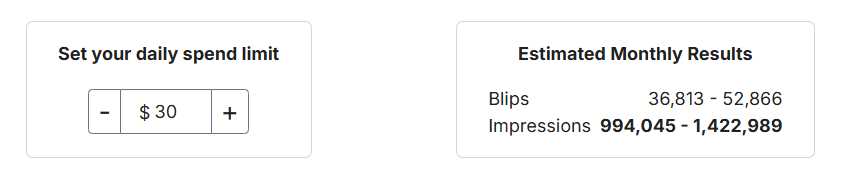
- If you see appointment or sales spikes on certain days, adjust your Blip budget to lean into those windows.
- For example, if your POS data shows that 40–50% of weekly revenue occurs Friday–Sunday, consider allocating a similar share of your billboard budget to those days.
-
Compare with other channels
- Watch Google Analytics, POS data, and call volumes for lift when your billboard impressions increase, especially during concentrated pushes.
-
Track simple KPIs like:
- Change in walk‑in volume during specific campaign dates.
- Increases in branded search queries for your name and “Conway” or “Myrtle Beach.”
- Number of code redemptions or landing page visits tied to billboard messaging.
Regulatory and Community Considerations
Billboards serving the Red Hill area sit in Horry County jurisdictions, Conway, and Myrtle Beach, each with sign regulations and visual considerations.
-
Know local rules
- Zoning, permitting, and sign standards are outlined on Horry County Planning & Zoning
- While digital billboard operators handle compliance, advertisers should be aware that some jurisdictions restrict certain content types (like adult entertainment or aggressive political messaging).
-
Stay within tasteful, community‑minded norms
- Avoid overly aggressive or sensitive imagery; this is a family‑oriented, faith‑rich region.
- Family tourism is central to the Myrtle Beach brand, so visuals that align with “wholesome fun” and community values typically resonate best.
-
Avoid message clutter
- The more we respect readability, the more effective your campaign—and the better it fits into the visual environment.
- Aim for one main visual, one message, one call‑to‑action per design to comply with best‑practice readability guidelines at 45–60 mph speeds.
-
Keep directions accurate
- If you reference exits or distances, double‑check them against current road layouts and GPS; construction and development can change access patterns.
- Review maps and, when in doubt, confirm via resources from Horry County Government or local GIS mapping tools before finalizing distance claims.
For more local context—planning maps, zoning, and area development trajectories—resources on the Horry County Planning & Zoning page and the City of Conway website are helpful when planning billboard advertising near Red Hill that aligns with future growth.
By understanding who travels through the Red Hill area, when they’re on the road, and why they’re driving, we can use Blip’s 21 nearby digital billboards in Conway and Myrtle Beach to build campaigns that feel local, timely, and impactful. With focused creative, smart scheduling, and ongoing testing grounded in real traffic and tourism patterns, digital billboards can become a core channel for reaching both the everyday residents of the Red Hill area and the millions of visitors who pass just a few miles away on their way to the Grand Strand—making billboards near Red Hill a practical, measurable part of your marketing mix.