Understanding the Red Bank Area Market
Red Bank is an unincorporated community in Lexington County, part of the Columbia, SC metropolitan area. That context is critical for billboard strategy and for deciding where Red Bank billboards can have the greatest impact:
-
Population & growth
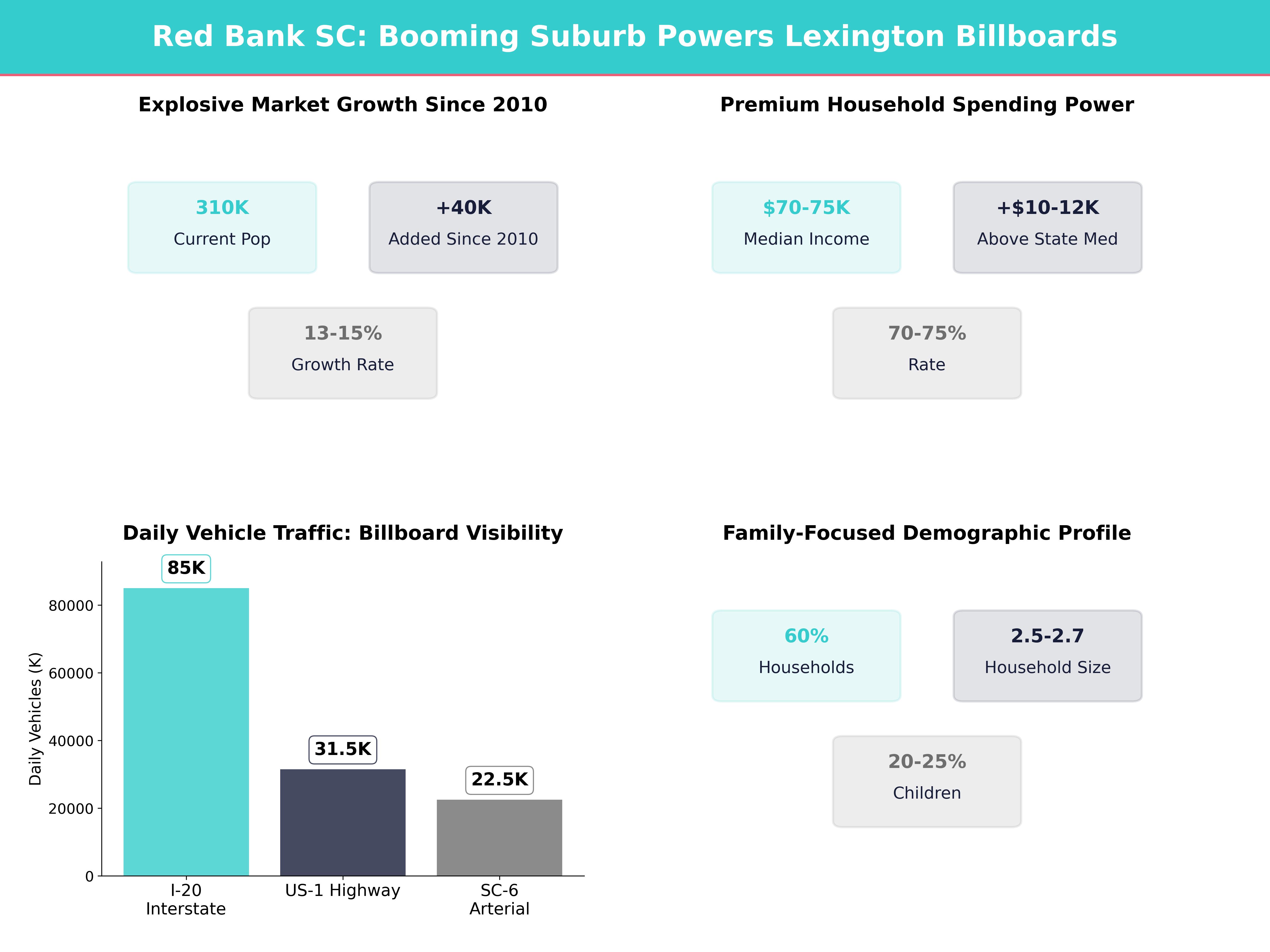
- The Red Bank area has a population of roughly 10,000–11,000 residents, while Lexington County overall has grown to over 310,000 residents, adding more than 40,000 people since 2010 based on county and regional planning estimates from the Lexington County and Central Midlands Council of Governments.
- The Columbia metropolitan statistical area has surpassed 850,000 residents and has added more than 100,000 residents since 2010, keeping it among the top 70 largest metros in the U.S. and one of the larger metros in the Carolinas.
-
Lexington County has posted population growth rates in the 13–15% range over the past decade, compared with state growth closer to 11%, making it one of South Carolina’s fastest‑growing suburban counties. For advertisers, this means:
- A steadily expanding local audience.
- More vehicles on the road (vehicle registrations in Lexington County have climbed by tens of thousands since 2010, according to county tax and DMV summaries).
- New residential subdivisions continually opening around Red Bank and Lexington, expanding the potential reach of billboard advertising near Red Bank.
-
Demographics & households
-
The Red Bank area skews toward young and middle‑aged families, similar to nearby Lexington:
- Median age in nearby Lexington is about 37–38 years, several years younger than many coastal retirement‑oriented counties.
- Average household size runs around 2.5–2.7 persons per household, indicating a high proportion of families with children.
-
Lexington County’s median household income is estimated in the low‑ to mid‑$70,000s (roughly $10,000–12,000 higher than the statewide median), with a large cluster of households in the $60,000–$100,000 range. This supports higher discretionary spending on:
- Dining and quick‑service restaurants.
- Home services and improvement.
- Health, dental, and wellness services.
- Youth activities and recreation.
- Owner‑occupancy rates in the broader Lexington area typically run around 70–75%, and more than 60% of households are identified as family households—strong signals for stable, repeat‑visit local customers who respond well to consistent billboard exposure.
-
Commuting patterns
-
Many residents in the Red Bank area commute toward Lexington and Columbia for work; regional transportation studies by the Central Midlands Council of Governments and Central Midlands MPO
- Typical one‑way commute times in western Lexington County average 25–28 minutes.
- A significant share of workers (often 35–45% in nearby ZIP codes) travel into the City of Columbia or major employment hubs along I‑20 and I‑26.
-
Key commuting corridors:
- US‑1 (Augusta Road) running between Red Bank, Lexington, and West Columbia.
- SC‑6 (South Lake Drive) connecting neighborhoods southeast of Lexington with the town and nearby schools and shopping.
- I‑20 and I‑26 carrying commuters across the Columbia metro from Lexington County toward downtown Columbia and the northeast suburbs.
-
South Carolina Department of Transportation (SCDOT) traffic counts on primary corridors around Lexington show:
- US‑1 near Lexington: typically 28,000–35,000 vehicles per day (AADT).
- SC‑6 (South Lake Drive) near Red Bank and Lexington: generally 20,000–25,000 vehicles per day.
- I‑20 near the Lexington interchanges: often 80,000–90,000 vehicles per day.
- With even a modest share of these vehicles passing the four digital billboards in Lexington, tightly targeted Blip campaigns can generate tens of thousands to hundreds of thousands of weekly impressions, depending on scheduling and budget.
-
Local economic anchors
- Nearby Lexington is the primary commercial center, with national retailers, medical offices, and restaurants clustered around US‑1 and SC‑6. See the Town of Lexington and Greater Lexington Chamber & Visitors Center
-
Many residents in the Red Bank area work in:
- State government and services in Columbia, anchored by the City of Columbia and the State House complex.
- Education and healthcare, including the University of South Carolina system (more than 35,000 students on the Columbia campus) and large hospital systems in the Columbia area that collectively employ tens of thousands of workers.
- Logistics, warehousing, and manufacturing along the I‑20/I‑26 corridors, where industrial parks and distribution centers have expanded rapidly over the past decade.
- Tourism and recreation centered on Lake Murray (promoted by Lake Murray Country millions of visitor‑days annually across the region, driving seasonal spikes in weekend and evening traffic that billboards can capture.
These demographics point toward strong opportunity for family‑oriented, commuter‑focused, and lifestyle messaging on billboards serving the Red Bank area, especially for businesses that can convert repeat weekly impressions into steady foot traffic and phone calls through well‑timed billboard advertising near Red Bank.
Where Our Billboards Reach Drivers Near Red Bank
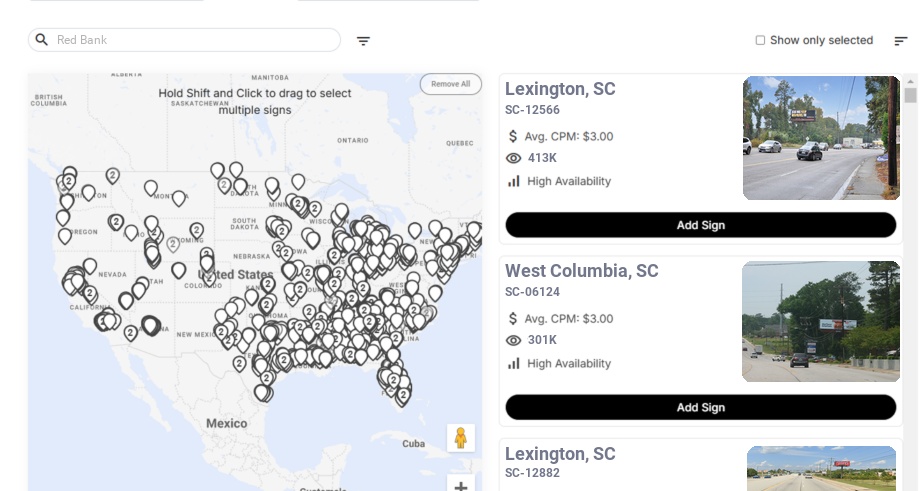
We have four digital billboards serving the Red Bank area, located in Lexington roughly 2.6 miles from Red Bank. That proximity allows us to capture both:
- Residents leaving the Red Bank area toward Lexington and Columbia.
- Shoppers and commuters traveling through Lexington who live in or pass near Red Bank.
For advertisers comparing different Red Bank billboards or considering billboard rental near Red Bank, this cluster of displays in Lexington offers a concentrated yet flexible footprint that follows the actual traffic patterns of local residents.
Given traffic volumes on US‑1 and SC‑6, a well‑funded campaign with regular daily rotations can easily generate hundreds of thousands of impressions per month across these four boards.
Key advantages of this footprint:
-
Suburban arterial coverage
The Lexington boards are positioned along major suburban corridors rather than remote highways, which increases relevance for:
- Grocery and retail promotions aiming at households that visit stores 2–3 times per week.
- Local services (auto repair, dentists, gyms, childcare) that rely on a 5‑ to 10‑minute drive‑time radius.
- Restaurants and quick‑service food capturing the 30–40% of workers who routinely eat out for lunch or pick up dinner on the way home.
-
High‑frequency local exposure
Regional transportation surveys indicate that most commuters use the same route 4–5 days per week, often at nearly the same time. With Blip’s flexible scheduling, we can:
- Reach the same driver 10–20+ times per month at peak commute times.
- Build frequency more cost‑effectively than a 24/7 buy, which often pays for low‑value overnight impressions.
-
Access to broader metro traffic
Lexington is a gateway for traffic heading toward downtown Columbia, Irmo, West Columbia, and Cayce (see the Town of Irmo City of West Columbia, and City of Cayce). Campaigns serving the Red Bank area can also influence decision‑making for people who may not live there but:
- Shop or dine in Lexington multiple times per week.
- Travel through on their way to Columbia jobs or Lake Murray recreation.
- Visit regional attractions highlighted by Experience Columbia SC.
We recommend pairing the Lexington boards with time‑of‑day and day‑of‑week scheduling to align with Red Bank area commute flows and shopping patterns, concentrating spend in the 20–30 hours per week that matter most for billboard advertising near Red Bank.
When to Run Your Ads: Timing for the Red Bank Area
Understanding local rhythms helps us get more value out of each blip.
Daily Patterns
-
Morning commute (6:30–9:00 a.m.)
- Regional data show that the largest departure peak for Lexington County commuters occurs between 6:30 and 8:30 a.m., when roughly 40–45% of workers begin their trips.
- Many workers from the Red Bank area head toward Lexington and Columbia using US‑1, SC‑6, and I‑20.
-
Ideal for:
- Coffee shops and breakfast QSR trying to tap into the 30–40% of adults who regularly purchase away‑from‑home breakfast.
- Daycare and schools, especially as school‑age children make up roughly 20–25% of the local population in nearby districts.
- Service businesses that need weekday calls or appointments booked before the workday.
- Consider calls to action like “Call this morning,” “Walk‑ins welcome,” or “Open at 7 a.m.” to match typical drop‑off and commute times.
-
Midday (11:00 a.m.–2:00 p.m.)
- Lunch traffic and errand runs pick up as workers take lunch breaks; national time‑use studies show that over half of workers occasionally leave the office or job site for lunch or errands.
-
Effective for:
- Restaurants and food trucks in the Lexington and Columbia areas promoting lunch specials or combos under key price points (e.g., $9.99 or $12.99).
- Medical and dental offices promoting same‑day or lunch‑hour visits, especially as many urgent care and dental practices report 20–30% of daily visits occurring midday.
- Retailers highlighting lunchtime shopping or order‑pickup, including curbside pickup that has grown by double‑digit percentages since 2020.
-
Afternoon school & work traffic (3:00–6:30 p.m.)
- Strong family presence in the Red Bank area means predictable school pickup and extracurricular activity runs tied to the calendars of Lexington County school districts and Lexington County School District One (Lexington One).
-
This window tends to produce a pronounced traffic bump in suburban corridors as:
- School dismissals cluster around 2:30–4:00 p.m..
- Standard workdays end around 4:30–5:30 p.m..
-
Strong for:
- Youth sports programs, tutoring, after‑school care, and enrichment programs that rely on seasonal registrations and sign‑ups.
- Grocery, big‑box retail, and pharmacies; industry surveys show 60–70% of grocery trips occur after work on weekdays or on weekends.
- Home services (HVAC, lawn care, home improvement) that aim to receive calls when homeowners are out of work and able to schedule estimates.
-
Evening (6:30–10:00 p.m.)
- Less commuter traffic but higher intent for dining out and entertainment; restaurant industry data show that roughly half of weekly restaurant spending occurs during dinner hours and weekends.
-
Good for:
- Restaurants, bars, and dessert spots in the Lexington and Columbia areas promoting happy hours, specials, and late‑night menus.
- Local events, church services, and community activities promoted through sources like The State WIS News 10, and WLTX, which maintain regional event calendars.
With Blip, we can selectively purchase only the time windows that matter, instead of paying for 24/7 coverage. For example, a childcare center might concentrate 80% of spend between 6:30–9:00 a.m. and 3:00–6:00 p.m. on weekdays, when parents are making real‑time decisions about drop‑off, pick‑up, and schedule changes.
Weekly & Seasonal Trends
-
Weekdays vs. weekends
- Weekdays bring heavier commuter traffic; in many suburban markets, Monday–Friday accounts for 65–70% of weekly vehicle miles traveled.
-
Weekdays are ideal for:
- B2B and professional services.
- Appointment‑driven businesses (healthcare, dental, financial services).
- Auto repair and maintenance targeting work‑bound commuters.
- Weekends see higher discretionary trips for shopping, dining, church, sports, and recreation; retail industry data show 30–40% of weekly in‑store sales often occur on Saturday and Sunday.
-
Weekends are ideal for:
- Retail and big‑ticket purchases (furniture, appliances, home improvement).
- Events and attractions.
- Family activities and faith communities.
-
School calendar
-
Lexington County School Districts (see district information via Lexington County and Lexington One) drive traffic patterns:
- August–May: strong weekday morning/afternoon school‑related traffic affecting tens of thousands of students and staff across the county.
- Holidays and summer: more midday and weekend recreational travel as families adjust schedules.
-
Advertisers serving families—camps, tutoring, pediatric offices, sports leagues—should align campaigns with:
- School start dates in early to mid‑August.
- Report card periods and standardized testing windows, when interest in tutoring spikes.
- Summer break, when interest in camps and childcare often increases by 20–30% compared with the school year.
-
Weather & events
-
South Carolina’s warm climate and long outdoor season (with 220+ sunny days per year on average in the Midlands) favor:
- Spring and fall promotions for landscaping, home improvement, and outdoor recreation.
- Summer campaigns tied to Lake Murray recreation, regional attractions promoted through Experience Columbia SC, and statewide tourism resources like Discover South Carolina.
-
Local media such as The State WIS News 10, and WLTX can help identify major events, festivals, and sports schedules worth anchoring billboard campaigns around, including:
- University of South Carolina home football games (drawing 60,000–80,000 fans to Williams‑Brice Stadium).
- Lake Murray events that can bring tens of thousands of visitors over event weekends.
- Town festivals and holiday parades in Lexington and surrounding communities.
Crafting High‑Impact Creative for the Red Bank Area
Drivers near Red Bank and Lexington are typically moving at 35–55 mph on suburban arterials, giving your message about 6–8 seconds to land. Out‑of‑home industry research suggests that messages over 7–8 words see a sharp drop in recall at those speeds. Effective creative here is bold, simple, and locally relevant to people actively noticing billboards near Red Bank on their daily commute.
Design Best Practices
-
Limit to 6–8 words of main text
- Example: “Family Dentistry 5 Minutes Ahead on US‑1.”
- Use large, high‑contrast fonts (white or yellow on dark backgrounds or vice versa) with main headlines at least 18–24 inches tall on the physical board, which translates well to digital formats.
- Keep secondary text to no more than 1–2 short lines.
-
Strong local cues
- Mention nearby touchpoints: “Near Red Bank,” “Just past Lexington,” “Next to [landmark] off US‑1.”
- Add simple directional cues: “Next Right,” “2 Miles Ahead,” or “Exit for Lexington.”
- Local references increase relevance; OOH studies often show 10–20% higher ad recall when creative references a nearby city, neighborhood, or landmark.
-
Simple imagery
-
Use one central image that reinforces your message:
- A dish or drink for restaurants.
- A smiling family for healthcare or dental.
- Before/after images for home services.
- Avoid clutter—aim for no more than 3–4 visual elements (logo, image, headline, call‑to‑action).
- Ensure logos and URLs are legible from distance; a good test is to view your design at 10% scale from several feet away on a normal monitor.
-
Immediate calls to action
- “Call Today,” “Book Online,” “Order Ahead,” “Enroll Now.”
- Short URLs or brand names that are easy to remember; studies show that simple, memorable domains significantly outperform long URLs for later search and direct traffic.
- If you use a phone number, keep it to 7–10 digits with clear spacing and avoid multiple numbers on a single creative.
Tailoring Messages to the Red Bank Area Audience
-
Family‑oriented messaging
-
With family households making up a majority of area households, emphasize safety, convenience, and value:
- “Safe, Local Childcare Minutes from Red Bank.”
- “Same‑Day Sick Visits for Kids.”
- “Family Meal Deals – Feed 4 for Under $30.”
- Highlight proximity to schools, churches, and parks frequently referenced in Lexington County and Town of Lexington resources, reinforcing that your Red Bank billboards speak directly to local parents and caregivers.
-
Commuter‑friendly offers
-
Capture morning and evening drivers—remember that over 80% of Lexington‑area workers commute by car:
- “Coffee & Breakfast Sandwich, Drive‑Thru at Next Light.”
- “Skip Traffic—Order Groceries Online, Pickup Tonight.”
- “Oil Change in 30 Minutes – No Appointment Needed.”
- Mention quick service times (e.g., “Done in 15 Minutes”) to appeal to time‑pressed commuters.
-
Bilingual opportunities
- Parts of Lexington County have a growing Hispanic population, with Spanish often the second‑most‑spoken language at home in local schools.
-
If your business serves Spanish‑speaking customers, consider:
- Rotating English and Spanish creatives on the same board.
- Using simple bilingual headlines (e.g., “Seguro de Auto / Auto Insurance”).
- Including Spanish‑language landing pages or staff availability in your call‑to‑action.
- Bilingual OOH campaigns in similar markets have shown double‑digit lifts in response among Hispanic audiences versus English‑only campaigns.
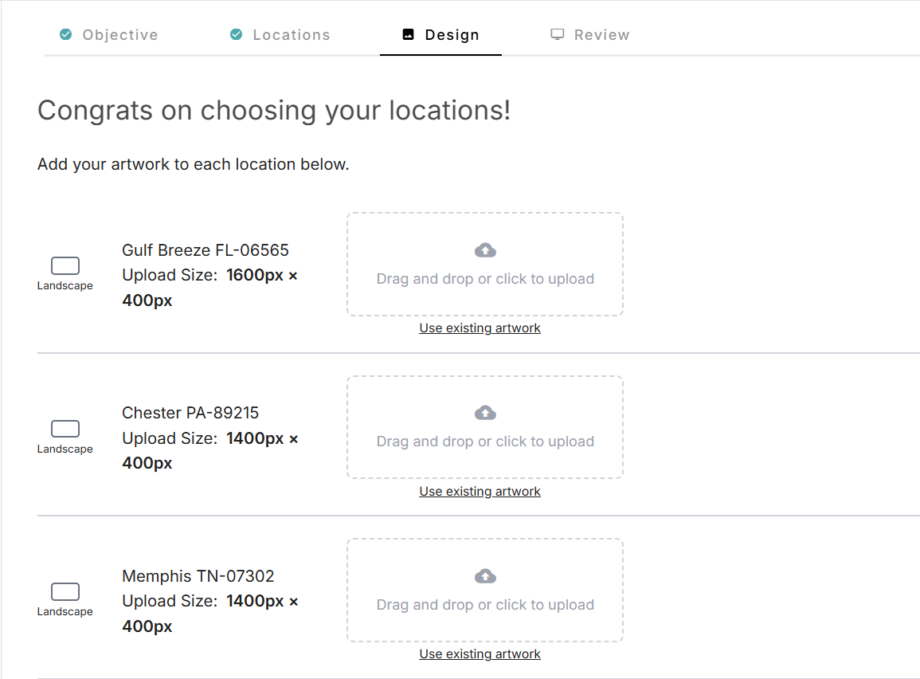
We can easily set up multiple creative variations in Blip and see which ones perform best based on timing and response indicators such as calls, web traffic, and store visits, then refine which billboards near Red Bank carry your top‑performing messages.
Using Blip Tools to Target the Red Bank Area Strategically
Blip’s platform lets us transform local knowledge into precise buying strategies, making it easier to approach billboard rental near Red Bank with a clear plan.
1. Geographic Targeting
While the boards are in Lexington, we can strategically reach the Red Bank area by:
- Prioritizing faces that capture eastbound or westbound traffic on corridors used by Red Bank commuters and shoppers, based on SCDOT counts and Central Midlands MPO
-
Aligning campaigns with neighborhoods and commercial nodes that Red Bank area residents frequent, such as:
- Major shopping centers along US‑1 and SC‑6.
- Schools and sports complexes referenced by Lexington One.
- Churches and community facilities listed by the Greater Lexington Chamber & Visitors Center
Because the boards are just 2.6 miles from Red Bank, creative mentioning “near Red Bank” or “serving the Red Bank area” will feel immediately relevant and authentic, especially to residents who drive that stretch daily or multiple times per week. This is why many advertisers treat these Lexington locations as their primary Red Bank billboards, even though the structures sit just outside the community boundary.
2. Daypart & Day‑of‑Week Controls
Using Blip, we can:
- Run higher bids during critical commute windows and lower bids in off‑peak hours to maximize impressions per dollar.
-
Emphasize:
- Weekdays for professional services, education, and healthcare that rely on predictable schedules.
- Fridays and weekends for restaurants, retail, churches, events, and entertainment, when discretionary driving typically peaks.
-
Adjust bids dynamically around known peaks—such as:
- Paydays (often the 1st and 15th of each month or alternate Fridays).
- Major events in downtown Columbia or at Lake Murray highlighted by Experience Columbia SC and Lake Murray Country
Example structure for a small business budget:
- 60% of budget: weekday morning and evening commute.
- 25%: Saturday and Sunday daytime (10:00 a.m.–7:00 p.m.).
- 15%: flexible slots for testing new times or creative (e.g., late evenings or midday weekday bursts).
This mix works well for most billboard advertising near Red Bank, giving consistent coverage while leaving room for experimentation.
3. Budget Flexibility & Testing
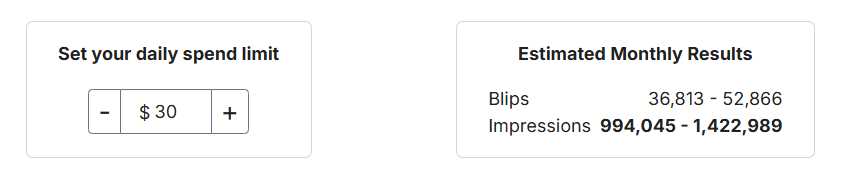
Because Blip allows very small minimum spends and pay‑per‑blip pricing:
- Local advertisers in the Red Bank area can start with as little as a few dollars per day and still secure visibility on high‑traffic boards.
-
We can:
- Test 2–3 creative variations in parallel, each with different headlines or offers.
- Shift budget toward the best performers after 2–4 weeks of data.
- Increase spend only on the days and times that drive measurable results (calls, web traffic, in‑store visits), while trimming low‑performing windows.
For example, if we observe that calls from Lexington and Red Bank ZIP codes spike 30–40% on days when we run heavier evening rotations, we can reallocate more of the budget into those precise hours, improving the return on your billboard rental near Red Bank over time.
Campaign Ideas for Common Advertisers in the Red Bank Area
Here are practical concepts tailored to how people live and travel near Red Bank and Lexington:
Local Retail & Services
-
Auto repair / tire shops
- Target: weekday mornings and late afternoons near commuter routes; national auto‑care data show that over 75% of vehicles are serviced at independent or chain shops within 10 miles of the owner’s home.
- Creative: “Check Engine Light On? Turn Right in Lexington” plus a simple logo and phone.
- Add urgency during seasonal transitions (summer heat, winter cold snaps) when A/C and battery failures typically spike by 20–30%.
- Consider promotions like “Free Brake Check” or “Tires from $XX.99” to drive immediate action.
-
Home services (HVAC, lawn, roofing)
- Target: spring and fall plus days following major storms (monitored through local outlets and SCDOT advisories and detours).
- Creative: “AC Not Keeping Up? Call [Brand] Before 5 p.m.”
- Emphasize response times (“Same‑Day Service”) and service areas (“Serving Red Bank & Lexington”).
- Extreme weather days can drive surges of 50% or more in inbound service requests—billboards timed to heat waves, cold snaps, or storms can capture this demand.
Restaurants & Food
-
Drive‑thru and quick service
- Target: 6:30–9:30 a.m. for breakfast; 11:00 a.m.–2:00 p.m. for lunch; 4:30–7:30 p.m. for early dinner.
- Creative: large product photo + price + simple direction (“Next to [shopping center] on US‑1”).
- Emphasize value and speed (e.g., “Breakfast Combo $4.99 – 3 Minutes Away”), as QSR studies show that price and convenience are the top drivers of choice for 70%+ of customers.
-
Family dining
- Target: 4:30–8:30 p.m., heavier on Friday–Sunday, when families tend to dine out more.
- Creative: “Kids Eat Free Tuesdays” or “Family Meals to Go – 5 Minutes from Red Bank.”
- Highlight group‑friendly seating and takeout, as family‑size to‑go meals have seen strong growth across suburban markets since 2020.
Healthcare, Dental, & Wellness
-
Primary care, urgent care, dental
- Target: weekdays, especially early morning and late afternoon; health providers often report that 60–70% of visits occur between 8:00 a.m. and 5:00 p.m.
- Creative: “Same‑Day Appointments Near Red Bank – Call [Phone]” with reassuring imagery.
- Consider offering specific hooks like “Walk‑Ins Welcome Until 7 p.m.” or “Most Insurance Accepted,” which can significantly improve conversion rates.
-
Fitness centers & studios
- Target: early morning (5:30–8:30 a.m.) and evening (4:30–9:00 p.m.), the two windows when over 70% of gym visits typically occur.
- Creative: “Join for $1 Today – 10 Minutes from Red Bank.”
- Tie campaigns to peak resolution periods (January, early spring, late summer back‑to‑school), when sign‑ups can jump 20–50% versus off‑season months.
Education & Youth Programs
-
Private schools, preschools, childcare
- Target: months leading into school year (June–August) and midyear enrollment periods (December–January).
- Creative: “Enroll Now for Fall – Limited Spots Near Red Bank.”
- Include quantifiable benefits where possible (“Small Classes – 12:1 Ratio”) that appeal to families in the $60,000–$100,000 income band common to Lexington County.
-
Sports leagues, camps, tutoring
- Target: seasonal sign‑up peaks; after‑school hours during February–April for spring sports and August–September for fall leagues.
- Creative: “Youth Soccer Sign‑Ups Close Friday – Visit [Short URL].”
- Youth sports participation in similar suburban counties often reaches 50–60% of school‑aged children, making this one of the most responsive categories for family‑oriented billboard campaigns.
Measuring Success and Optimizing Over Time
Even though we cannot measure impressions from billboards serving the Red Bank area as precisely as digital clicks, we can still track impact and improve performance.
Practical KPIs to Watch
-
Direct behaviors
- Inbound calls during or shortly after your scheduled blip windows; track changes of 10–20% or more as meaningful.
- Website visits—especially “brand + Lexington” or “brand + Red Bank” searches—and overall organic traffic from local ZIP codes.
- Coupon redemptions or offer codes displayed on the boards; even modest redemption rates (e.g., 1–3% of in‑store customers) can validate billboard effectiveness.
-
In‑store indicators
- Ask “How did you hear about us?” and specifically track “billboard” responses; aim for at least 5–10% of new customers mentioning the board after a few weeks of consistent exposure.
- Monitor foot traffic changes around campaign launches and peaks, comparing 4–8 weeks before vs. after your campaign starts.
-
Digital lift
- Watch for spikes in Google searches for your brand name coming from ZIP codes in the Red Bank and Lexington areas.
- Track online appointment or order volume by day and time to see which Blip schedules correlate with better response.
- Many advertisers see 5–15% lifts in branded search volume after sustained OOH exposure, even without other major marketing changes.
Iteration Strategy
Using those signals, we can adjust:
-
Creative
Swap underperforming designs every 2–4 weeks. Keep a high‑performing “anchor” creative while testing one new variation at a time (e.g., change the offer, headline, or image but not all three at once).
-
Schedule
If calls and visits spike after evening blips, we can reallocate budget toward that window. Conversely, if midday shows weaker correlation, we can dial it down and re‑test later during different seasons or promotions.
-
Messaging
Test:
- Value‑focused (“Save 20% This Week”).
- Convenience‑focused (“Minutes from Red Bank”).
- Quality‑focused (“Voted #1 in Lexington” or “Rated 4.8 Stars Locally”).
- Local‑identity focused (“Family‑Owned in Lexington Since 1998”).
Whichever message drives the most measurable response—more calls per impression, more form fills during the hours you run, higher in‑store traffic during campaign windows—becomes the template for future creatives.
By combining local knowledge of commuting patterns, family‑heavy demographics, and the commercial gravity of nearby Lexington with Blip’s on‑demand digital billboard tools, we can build highly efficient campaigns serving the Red Bank area. Whether the goal is more phone calls, walk‑ins, or online orders, using data‑informed scheduling, focused creative, and ongoing optimization will help your brand stand out on the roads your customers drive every day and get more value from billboard advertising near Red Bank.